Attention Capital | A Weekly Column by Josh Stein - Part Two: The Wrong WrapperAttention Capital | A Weekly Column by Josh Stein - Part One: The Largest Attention Allocator in the WorldThe New Reality for Cord-Cutters: Plex Overhauls Premium Tier PricingThis Week's StreamScoop Streaming TV GuideCalifornia's Streaming Ad Volume Law Upends Agency PlaybooksThe End of Loud Streaming Ads: How California's SB 576 Reshapes National MediaState of Streaming Presents: Attention Capital | A Column by Josh Stein - WWE Rights Stack (Part Two)SOS. ExclusiveAre You My Mother? Comcast Just Cut Peacock Loose - Here's Who Buys It.The Pre-Validated Screen: Streamers Trade Reality Dating for BookTok IPComcast Just Broke Up With Its Own Business Model. Here's Why Your Streaming Budget Should Care.State of Streaming Presents: Attention Capital | A Column by Josh Stein - WWE Rights Stack (Part One)This Week's StreamScoop Streaming TV GuideBeyond the Follower Count: The 'Social-to-Theatrical' Pipeline Saving the Box OfficeGaming the Front of the Line: A New State of Streaming Contributor Enters the ChatSports Teams Have Been Giving Away Their Most Valuable Asset. Kiswe Is Helping Them Take It Back.Attention Capital | A Weekly Column by Josh Stein - Part Two: The Wrong WrapperAttention Capital | A Weekly Column by Josh Stein - Part One: The Largest Attention Allocator in the WorldThe New Reality for Cord-Cutters: Plex Overhauls Premium Tier PricingThis Week's StreamScoop Streaming TV GuideCalifornia's Streaming Ad Volume Law Upends Agency PlaybooksThe End of Loud Streaming Ads: How California's SB 576 Reshapes National MediaState of Streaming Presents: Attention Capital | A Column by Josh Stein - WWE Rights Stack (Part Two)SOS. ExclusiveAre You My Mother? Comcast Just Cut Peacock Loose - Here's Who Buys It.The Pre-Validated Screen: Streamers Trade Reality Dating for BookTok IPComcast Just Broke Up With Its Own Business Model. Here's Why Your Streaming Budget Should Care.State of Streaming Presents: Attention Capital | A Column by Josh Stein - WWE Rights Stack (Part One)This Week's StreamScoop Streaming TV GuideBeyond the Follower Count: The 'Social-to-Theatrical' Pipeline Saving the Box OfficeGaming the Front of the Line: A New State of Streaming Contributor Enters the ChatSports Teams Have Been Giving Away Their Most Valuable Asset. Kiswe Is Helping Them Take It Back.
Ad Tech

How Freely Works: The Aggregator Paradox UK
SN
SOS. News Desk
Apr 20262 min read
How Freely Works: The Aggregator Paradox UK

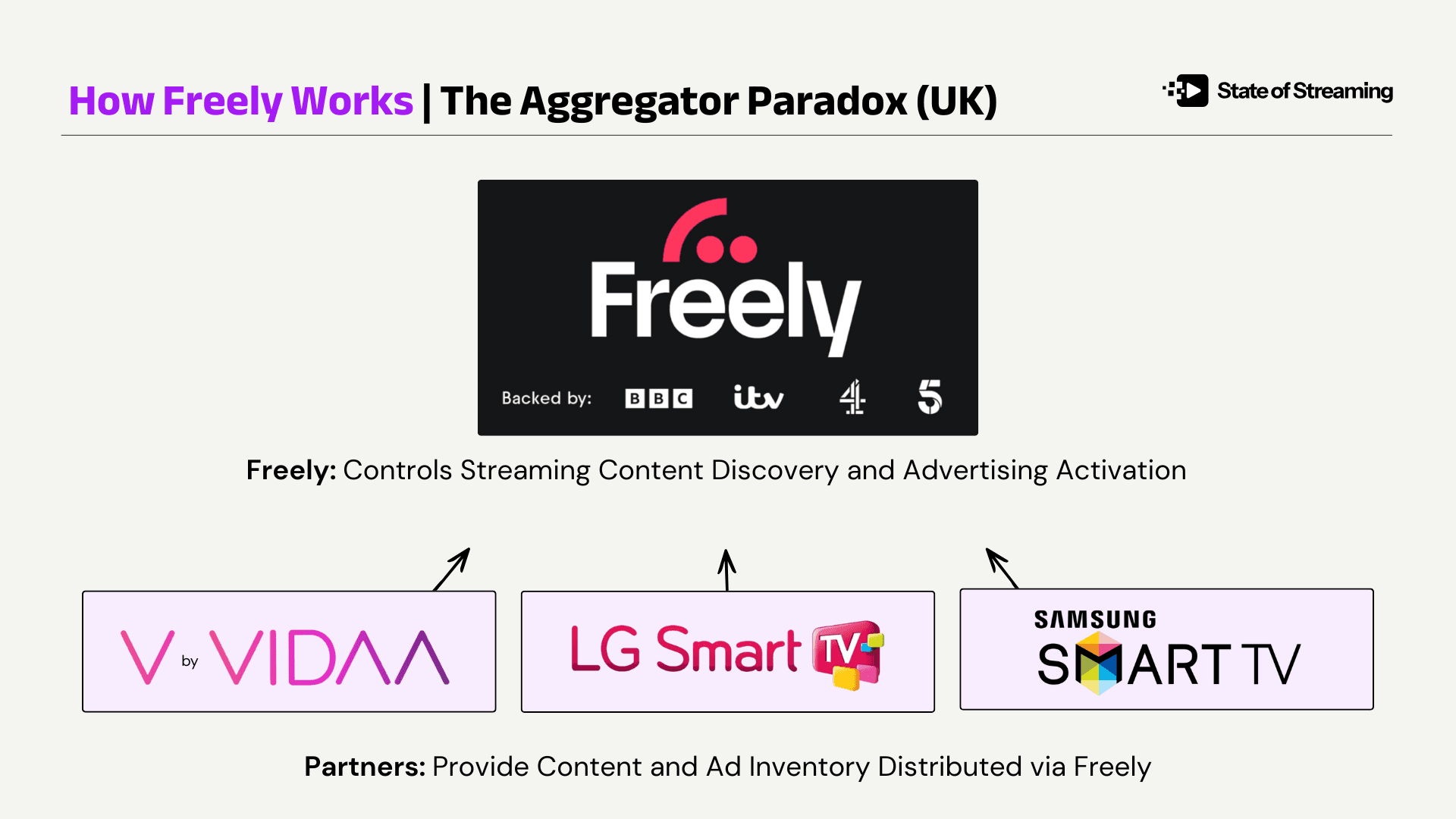
The UK's free-to-air streaming platform — the joint venture behind BBC, ITV, Channel 4, and Channel 5's IP-delivered television push — announced Spotlight Channels this week. CTV operating system partners can now embed up to 11 of their own free ad-supported streaming television (FAST) channels directly inside Freely's live TV guide. V, the OS formerly known as VIDAA and the software layer inside Hisense TVs, signed on as the launch partner.

On the surface, this looks like a content expansion. It isn't.

It's a platform architecture decision.

Freely's stated mission is to replicate the linear TV experience through IP delivery — a unified interface that makes streaming feel like broadcast. Spotlight Channels extends that interface outward, turning Freely's guide layer into a surface that OS partners can build on top of. Hisense gets FAST channel slots inside a trusted, familiar viewing environment. Freely gets distribution reach through Hisense's installed base without having to acquire the content itself.

The tension the deal creates is the same tension running through every aggregation layer in streaming: Freely wants to own the linear viewing experience, but the OS providers it needs as partners are simultaneously running their own FAST platforms and prioritizing their own surfaces. Spotlight Channels is Freely's answer to that conflict — collaborate at the interface, compete underneath it.

That model has a name in the US market. Roku runs it. Amazon runs it. The aggregator opens its platform to content that would otherwise compete with it, captures the advertising revenue the content generates, and uses the partnership to deepen the platform's gravity. The content owner gets distribution. The platform gets data, inventory, and lock-in.
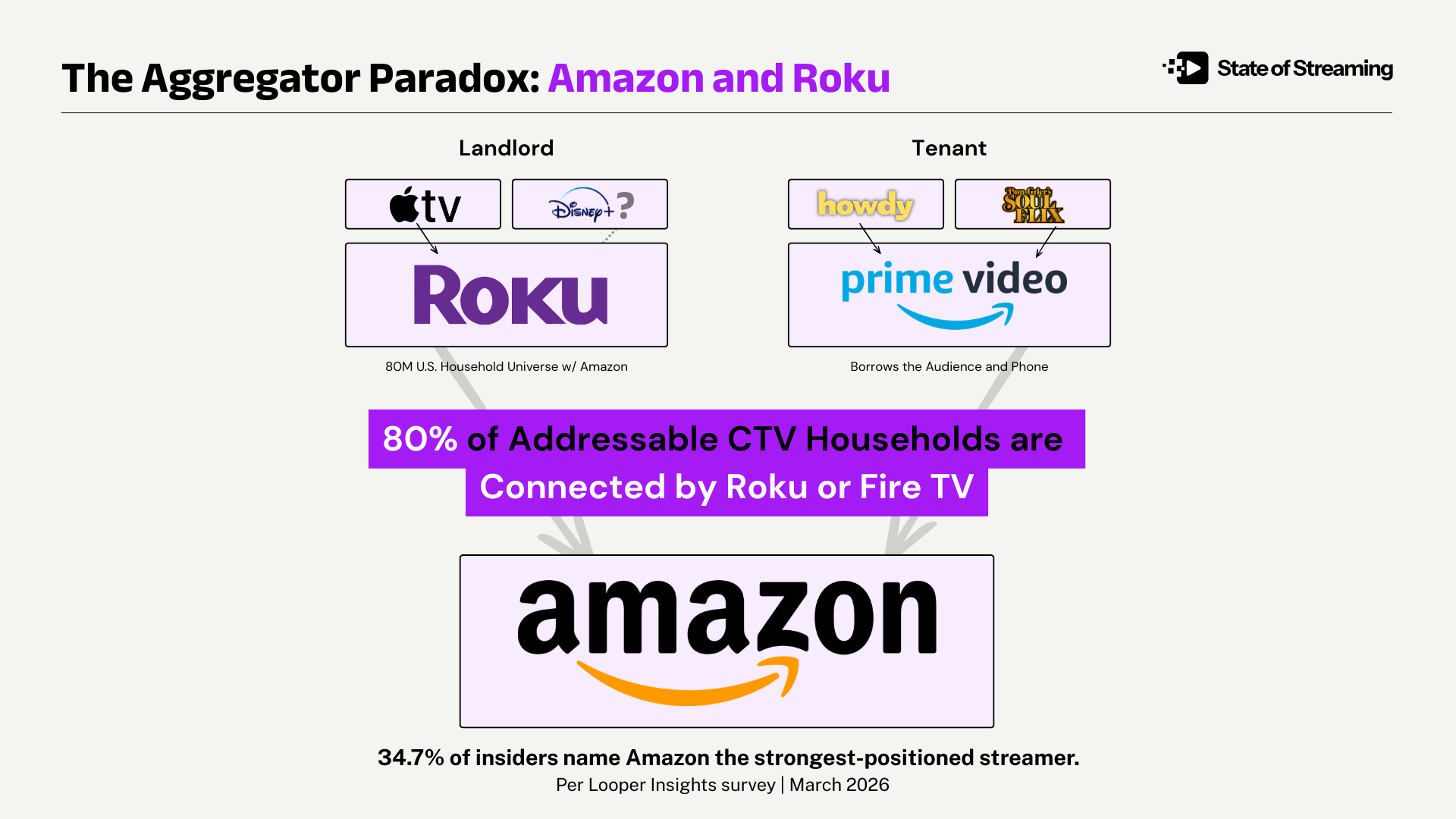
Read This Next: The Aggregator Paradox

Freely is making the same bet in a market where public broadcasters still carry structural authority over the linear viewing habit. The question isn't whether the model works — it does. The question is whether Freely can execute it before the OS layer consolidates around its own FAST stacks and the guide becomes the battleground rather than the infrastructure.

Ecosystem builders compound and Freely just let us know which side of that equation it wants to be on.

Get the SOS. Brief

The sharpest streaming intelligence, delivered to your inbox.