Comcast Just Broke Up With Its Own Business Model. Here's Why Your Streaming Budget Should Care.
On Monday morning, Comcast announced it's splitting into two separate public companies. The broadband and internet business keeps the Comcast name. NBCUniversal — Peacock, NBC, Telemundo, Bravo, Universal Studios, and Sky — spins out on its own, targeting independence by mid-2027.
Comcast stock jumped 23% on the news. Wall Street celebrating not because the plan is bold but because the old plan is finally over.
For fifteen years, Comcast operated on the theory that owning both the pipes that deliver TV and the content that runs through them was a competitive advantage. AT&T tried the same thing when it bought HBO and Warner Bros. for $85 billion in 2018. Verizon tried it with Yahoo and AOL. Every version of this experiment ended the same way: with the company admitting the theory was wrong and the content business being cut loose. Comcast is the last major player to reach that conclusion.
The era of vertical integration in media is officially over. What comes next is the part that matters to you.
Peacock Just Became the Most Valuable Unowned Asset in Streaming
When a media company splits itself in two and retains a 19.9% stake in the content side with explicit plans to sell that stake down over time, it is signaling that it expects outside buyers to come.
We've seen this exact structure before. Earlier this year, Warner Bros. Discovery — the parent of HBO, CNN, and the Warner film studio — announced a similar split. The moment it did, NBC, Netflix, and Paramount all came circling. Paramount Skydance ultimately agreed to pay $110 billion to win the bidding war.
Peacock is now in that same position. It is a standalone streaming service carrying the NFL, the Olympics, the Premier League through Sky, Universal's film studio output, and a theme park business growing faster than almost anything else in entertainment. Every major tech company with streaming ambitions has a reason to want it.
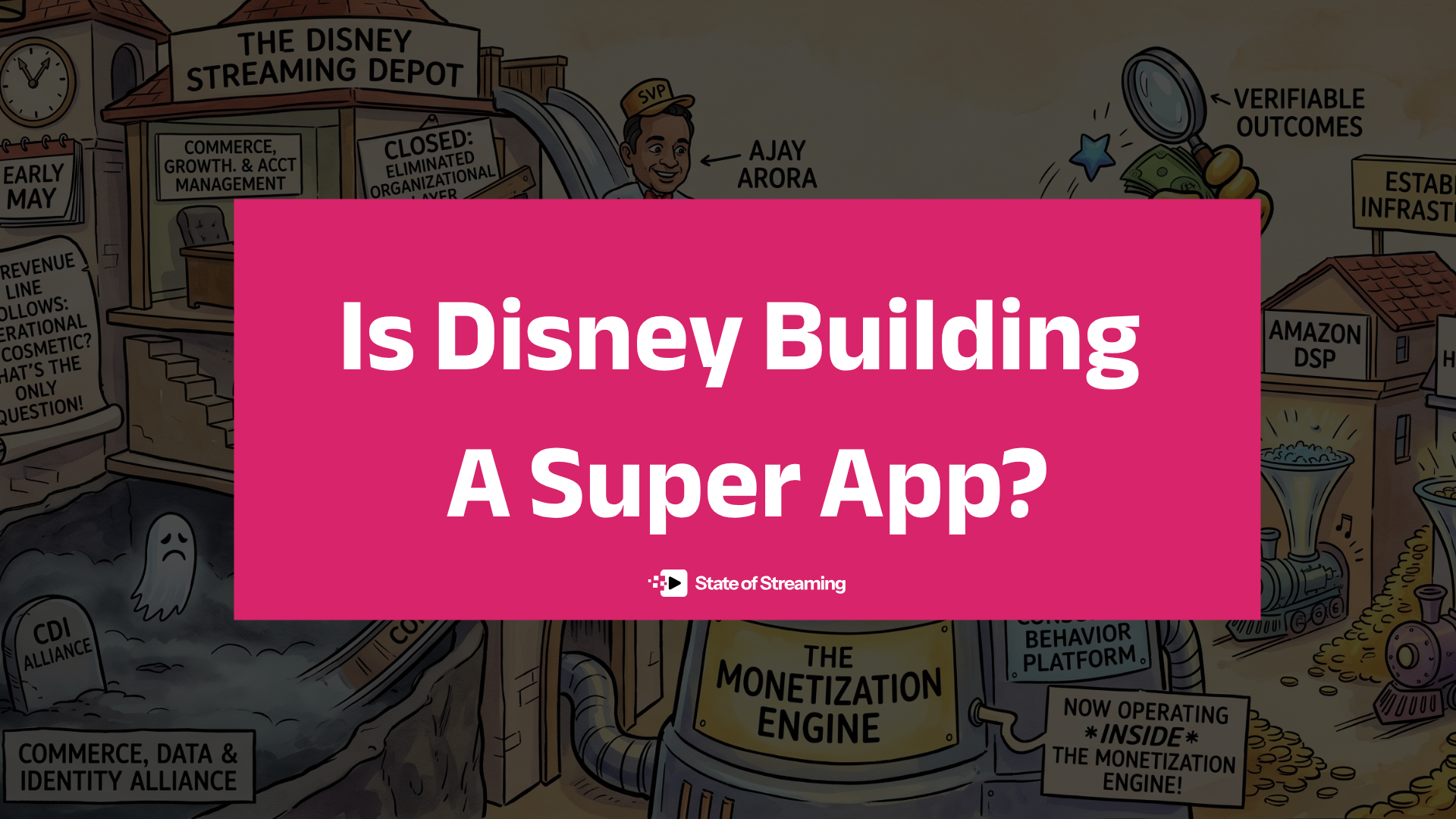
comcRead about how Disney is building a universal audience identifier around park visitation next
Netflix fills the live sports gap its subscription model has never fully solved. Apple gets a broadcast network, Spanish-language dominance through Telemundo, and European scale through Sky — three things its content strategy has spent years trying to build organically without success. Amazon gets the live news infrastructure and brand credibility that Prime Video lacks.
None of that means a deal happens tomorrow. Comcast Co-CEO Mike Cavanagh, who will lead the standalone NBCUniversal, was direct on Monday's announcement call: "The plan for NBCUniversal and Sky is to invest for growth." Warner Bros. Discovery's leadership said something similar before Paramount Skydance paid $110 billion to acquire it. The structure — a standalone content company with a retained stake and explicit plans to monetize it — is designed to keep every option open.
The Ad Tech Question Everyone Is Missing
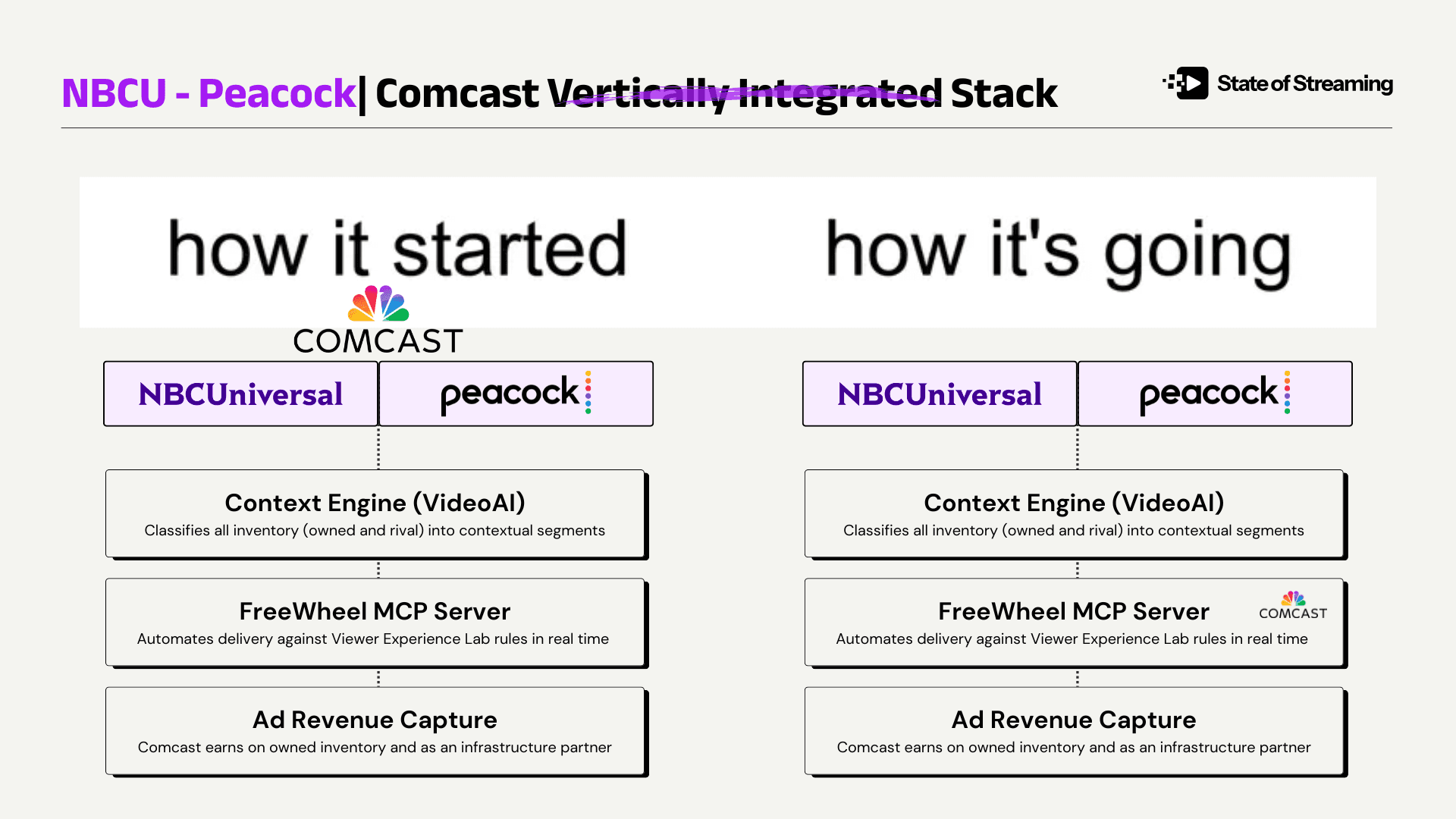
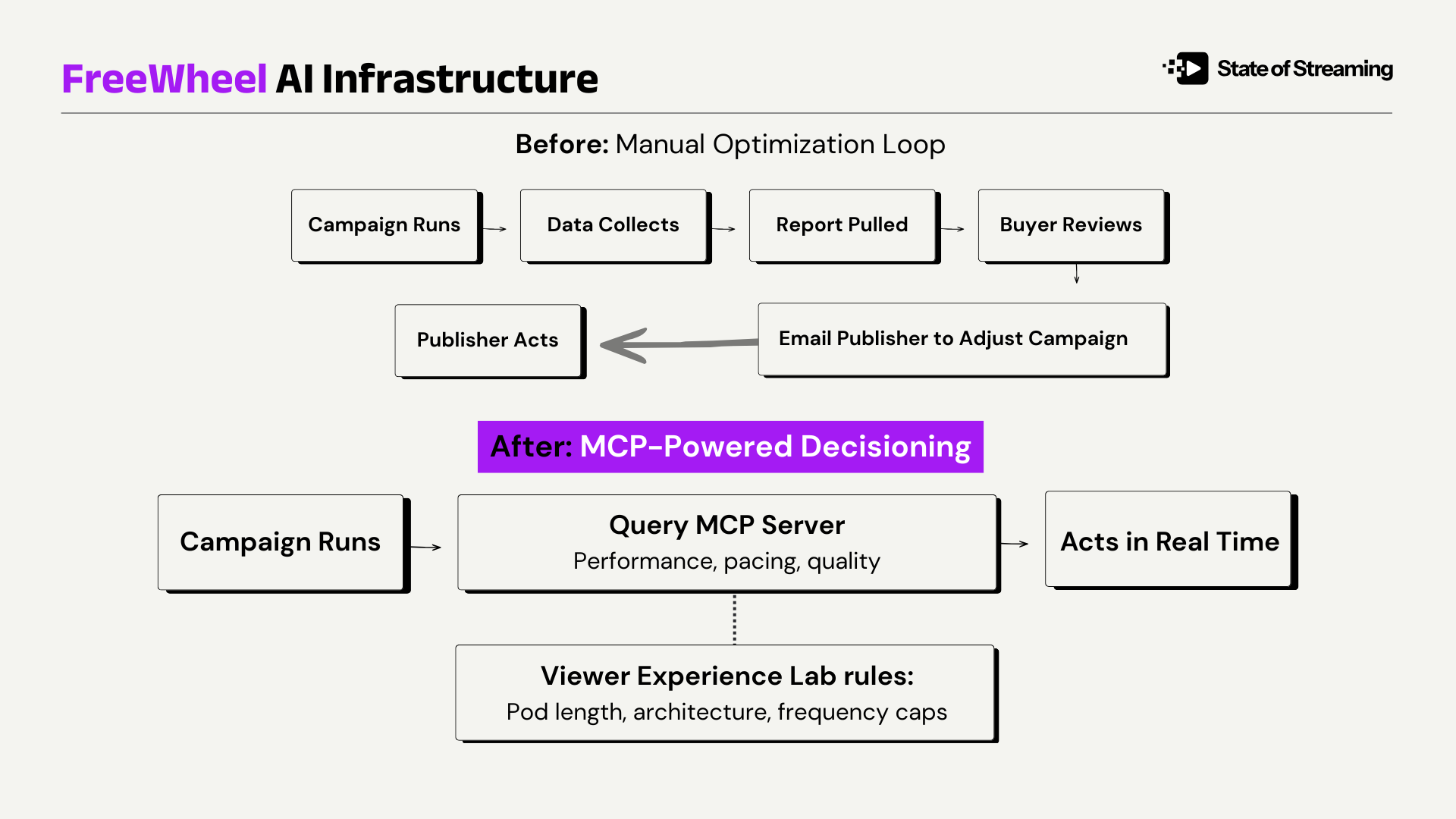
Peacock's advertising infrastructure — the technology that decides which ads run, when they run, and how they're targeted — is built on FreeWheel. FreeWheel is Comcast's ad decisioning platform, the engine underneath programmatic buying across Peacock's inventory. In April, we covered FreeWheel's expansion into AI-driven contextual targeting, building tools that make Peacock's premium inventory smarter and more addressable for buyers.
FreeWheel stays with Comcast's broadband business. Peacock goes the other way.
That means the streaming service and the technology stack powering its ad business will soon be owned by two separate public companies with different shareholders and different strategic priorities. Whether FreeWheel continues serving Peacock under a commercial agreement, or whether a standalone NBCU eventually rebuilds on a different platform, is an open question with direct implications for how campaigns are planned, executed, and measured against Peacock inventory.
If you are currently running FreeWheel-dependent buys against Peacock — or planning to — that question deserves an answer before 2027, not after.
Read about how NBCU/Peacock works with FreeWheel (as of 6/30/2026) next
What to Do With This Right Now
The practical window here is eighteen months. That is how long the separation is expected to take. During that period, Peacock operates as a business in transition: making ad tech commitments, signing data partnerships, and setting measurement infrastructure as a company that knows it may soon have a different owner.
Buyers who understand that dynamic can move with it. Inventory that looks stable on the surface is being priced against a platform whose ownership, tech stack, and strategic direction are all genuinely uncertain. That uncertainty cuts both ways — it creates risk for buyers who aren't paying attention, and opportunity for those who are.
SOS. has been tracking this structural shift since January — first through Versant's distribution architecture play, then through Fox's $22 billion acquisition of Roku as an OS-level bet on streaming's next phase. The Comcast-NBCU split is the largest move yet in a reorganization of the streaming industry that is moving faster than most ad budgets are accounting for.
The furniture Comcast built is now worth more than the house it lived in. The question is who buys it next — and whether your media plan is ready for the answer.
Why Subscribe to State of Streaming
Streaming is moving faster than any single trade publication can cover — and most of what gets published tells you what happened, not what it means for your business. SOS. exists for the buyer who needs to stay ahead of platform power shifts, inventory quality changes, and M&A moves before they show up in your CPMs. We publish the Unified Streaming Power Index (USPI), the only buyer-facing directional ranking of streaming platforms scored on reach, CPM efficiency, ad tech interoperability, and targeting legitimacy. No sponsored rankings. No platform PR. Just the analysis your investment deserves.
Subscribe below.
If You Enjoyed This, You May Also Enjoy
So Fox Wants to Buy Roku. Do You Know Why? — Fox's $22 billion Roku acquisition isn't a content play. It's a bet on controlling the home screen every viewer passes through before pressing play. SOS. ranked Roku #1 in the USPI before the deal surfaced.
How Versant Quietly Built the Future of TV Advertising in Six Weeks — While the industry watched the Warner Bros. Discovery bidding war, a company most advertisers had never heard of built a distribution architecture that matters more. Here's how.
Get the SOS. Brief
The sharpest streaming intelligence, delivered to your inbox.