●Pour One Out for Addressable Linear TV | A Column by Michael Beach●SOS. ExclusiveRegional Sports Networks Aren’t Dying, They’re Evolving: An Interview with Nana Kofi Amoh●When a Creator Leaves, What Stays? - Attention Capital | A Column by Josh Stein●The Premium Moat: Why Apple TV is Streaming’s Holdout Against the Unscripted Wave●SOS. ExclusiveThe Great Transatlantic Streaming Divide: An Interview with Hemant Soni and Rahul Bhatia●How Sports Teams Are Rebuilding Their Local Media Businesses - Amoh Sports Media | A Column by Nana Kofi Amoh●The Intelligent Rebundling: Cloud, AI, and the Two Faces of Streaming●SOS. ExclusiveCan You Prove What Your CTV Home-Screen Placement Is Worth? Looper Insights' Lucas Bertrand Says Now You Can●What's Streaming? The StreamScoop Streaming TV Guide for the Week of October 4, 2026●Unlocking the Living Room: Why YouTube's New "Co-Viewed" Metric Changes the Math●When to NOT Care About the Bot Traffic - "see Fou yourself" FouAnalytics | Dr. Augustine Fou●SOS. ExclusiveHow Roku is Rewiring Sports Streaming: An Interview with Joe Franzetta, Head of Sports @ Roku●How MLB Teams Will Gain Revenue After Cable - Amoh Sports Media | A Column by Nana Kofi Amoh●The Last Truly Shared Experience: Live Sports Own the Attention Economy●The Meter Is the Market - Attention Capital | A Column by Josh Stein●Pour One Out for Addressable Linear TV | A Column by Michael Beach●SOS. ExclusiveRegional Sports Networks Aren’t Dying, They’re Evolving: An Interview with Nana Kofi Amoh●When a Creator Leaves, What Stays? - Attention Capital | A Column by Josh Stein●The Premium Moat: Why Apple TV is Streaming’s Holdout Against the Unscripted Wave●SOS. ExclusiveThe Great Transatlantic Streaming Divide: An Interview with Hemant Soni and Rahul Bhatia●How Sports Teams Are Rebuilding Their Local Media Businesses - Amoh Sports Media | A Column by Nana Kofi Amoh●The Intelligent Rebundling: Cloud, AI, and the Two Faces of Streaming●SOS. ExclusiveCan You Prove What Your CTV Home-Screen Placement Is Worth? Looper Insights' Lucas Bertrand Says Now You Can●What's Streaming? The StreamScoop Streaming TV Guide for the Week of October 4, 2026●Unlocking the Living Room: Why YouTube's New "Co-Viewed" Metric Changes the Math●When to NOT Care About the Bot Traffic - "see Fou yourself" FouAnalytics | Dr. Augustine Fou●SOS. ExclusiveHow Roku is Rewiring Sports Streaming: An Interview with Joe Franzetta, Head of Sports @ Roku●How MLB Teams Will Gain Revenue After Cable - Amoh Sports Media | A Column by Nana Kofi Amoh●The Last Truly Shared Experience: Live Sports Own the Attention Economy●The Meter Is the Market - Attention Capital | A Column by Josh Stein
Ad Tech

Instagram Tests Horizontal Video on TVs as Streamers Move to Mobile
NC
Nicholas Cardoso
Jun 20261 min read
Instagram Tests Horizontal Video on TVs as Streamers Move to Mobile

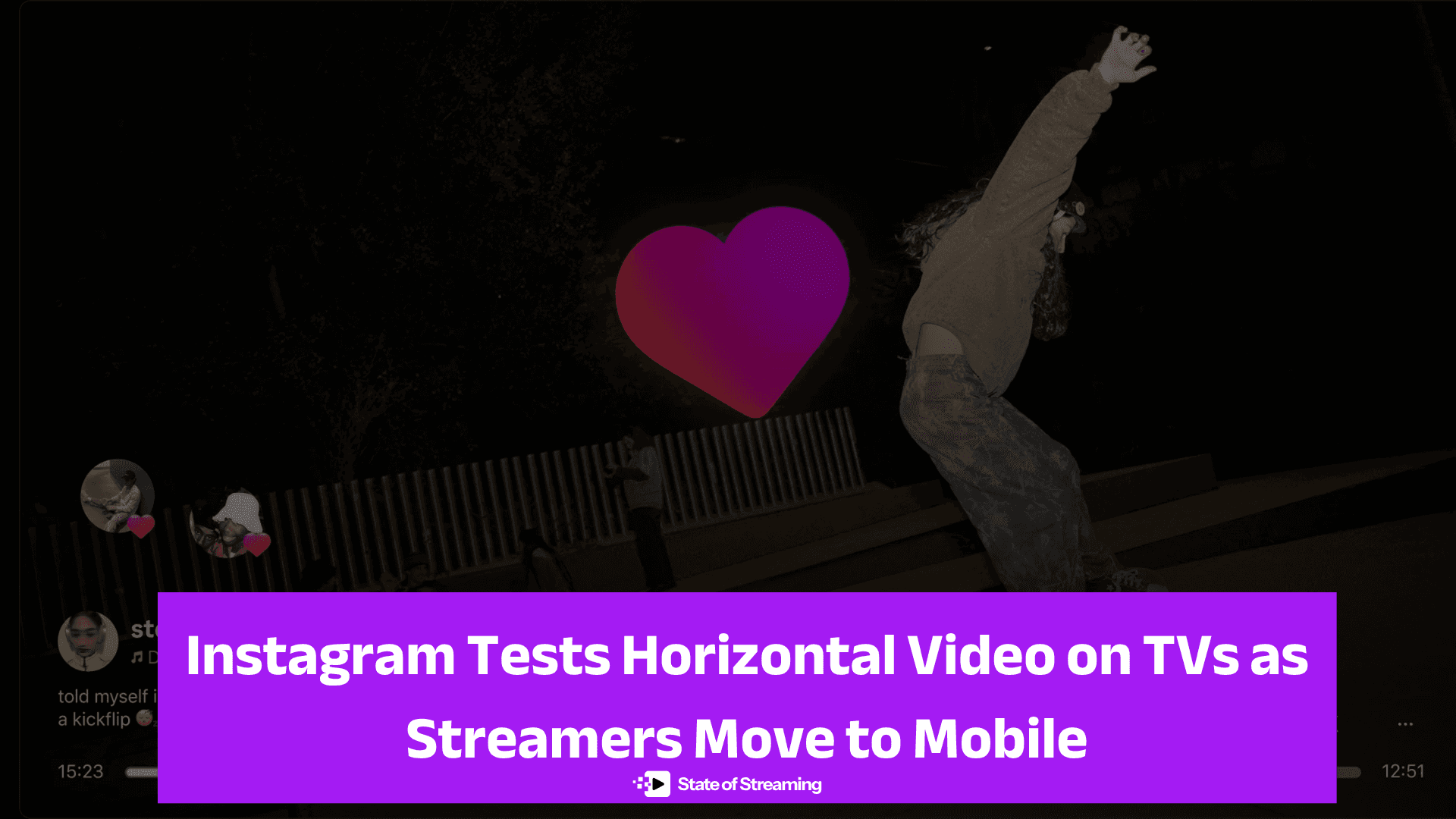
The division between social media networks and premium streaming platforms continues to shrink as both sides adopt new aspect ratios to capture shifting advertising revenue. In an official blog post, Instagram announced the expansion of its television application to Samsung devices, positioning the mobile-first platform to chase connected TV ad dollars.

The experiment represents a direct push for traditional living room viewership. Tessa Lyons, vice president of product for Instagram, noted that television represents "the next frontier" for the social media platform. The expansion to television brings the service to the majority of connected TV hardware in the United States. Meta is also testing features that allow users to cast mobile Reels directly to television screens.

By creating a dedicated space for widescreen media, Instagram is hoping to encourage creators to produce more long-form content. This shift allows the platform to claim a share of living room viewing and chase a growing $81 billion connected TV ad market. The expansion targets digital-first brands looking for wide-scale brand attention while allowing social creators to scale past short clips into longer programming.

This shift to the television screen reverses the mobile strategy currently dominating the streaming market. Networks like Disney Plus, Netflix and Peacock have expanded their mobile features to keep users engaged throughout the day. Peacock recently introduced its own vertical video format alongside short unscripted series to reach daily smartphone users and tap into the growing market of consumers who do not have fixed home broadband.

The visual formats of digital entertainment are effectively crossing paths. Television networks are compressing their programming into vertical formats to secure daily habits on mobile devices. Meanwhile, social media apps are formatting content horizontally to claim a share of living room viewing. For media buyers, these changes mean traditional platform boundaries have faded, leaving tech companies and legacy entertainment giants competing for the same consumer attention.

If You Liked This You May Also Like

Peacock Doubles Down on Vertical Video to Capture Mobile Streamers

Vertical Video Isn't a TikTok Strategy. It's a Broadband Gap Strategy.

Get the SOS. Brief

The sharpest streaming intelligence, delivered to your inbox.