Attention Capital | A Column by Josh Stein - The Living Room Already Changed Hands (Part Two)
Editor's Note
This is Part Two of a two-part series on creator content as a mispriced asset class. If you missed Part One — covering YouTube's Nielsen dominance, the CTV viewing shift, and how Samsung, Tubi, and Netflix are already treating creator content as television — read it here first. Subscribe to State of Streaming for Attention Capital every week.
What Hollywood Has That Creators Don’t
Traditional television production runs on a financing model that took decades to build.
A network pays a license fee covering perhaps 70% of production costs. The studio absorbs the deficit, expecting to recoup through syndication, international licensing, and streaming rights. Completion bonds guarantee delivery. Gap financing covers shortfalls. Insurance packages protect against delays. Tax credits offset 20-40% of production spend in favorable jurisdictions.
The entire system evolved to fund content at the scale audiences demand. A showrunner doesn’t need to be a CFO. They can focus on making the show because the financial architecture handles everything else.
Creator content has none of it.
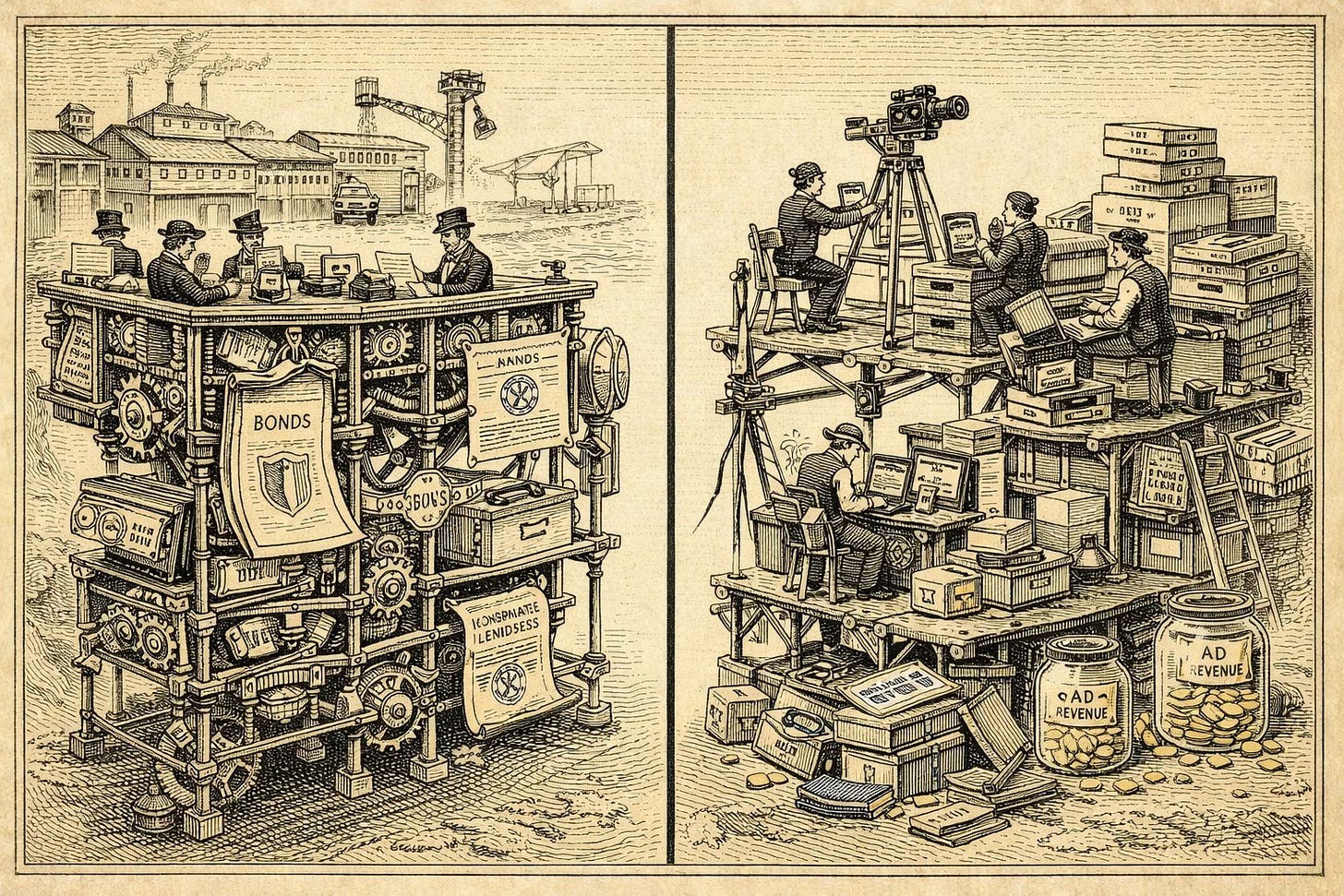
The reasons are structural, not circumstantial.
No syndication equivalent. Back-catalog generates residual ad revenue, but there’s no “selling to another network.” The secondary market that just began emerging through FAST channels and Netflix deals didn’t exist until 2024-2025.
No license fee structure. YouTube provides distribution but no upfront funding. The platform takes 45% of ad revenue. The creator gets 55%. There’s no advance. There’s no development deal. There’s no pilot order.
No portfolio diversification for lenders. Individual creators are concentrated single-entity bets. A traditional studio can spread risk across a slate. A creator loan is binary exposure to one person’s continued relevance.
No tax credit access. Creator content rarely qualifies for film/TV production incentives despite comparable budgets. The definitions were written for traditional production structures. Nobody anticipated that a YouTube channel would need a 330-foot trick-shot tower.
Total platform dependency. Business outcomes hinge entirely on a single platform’s algorithm and monetization policies. When YouTube changes its recommendation system, creator revenue changes overnight. Try explaining that to a credit committee.
The banking system compounds the problem.
Eric Wei, co-founder of Karat Financial, witnessed creators earning millions per year get declined for $100 purchases at department stores. William Osman (3+ million YouTube subscribers) couldn’t secure six figures in credit from traditional banks to fund his convention. Colin and Samir described “a lot of confusion about what our business actually did and how to classify it.”
Wei’s diagnosis: “Creators are real businesses, and banks don’t understand them.”
Sima Gandhi, CEO of Creative Juice, put it more sharply: “Creators are the next generation of SMBs in America... yet they’re not treated like a business.”
The existing creator financing companies each address pieces of the problem:
Spotter ($1.7 billion valuation) has deployed over $980 million to YouTube creators, licensing back-catalog AdSense revenue for 1-5 year terms. The average deal is approximately $1.5 million. Partners include Dude Perfect, Airrack, Colin & Samir, and The Try Guys. Amazon took a minority stake in October 2024.
What Spotter does is backward-looking. They monetize the existing catalog. They don’t finance the production that creates new catalogs.
Karat Financial ($100M+ raised) has extended over $1.5 billion in credit to creators via a Visa-partnered business credit card, underwriting based on social metrics rather than traditional credit scores.
Credit cards don’t fund $500K-per-episode production budgets.
Breeze Financial financed Smosh’s buyback from Mythical Entertainment, enabling co-founders Ian Hecox and Anthony Padilla to reacquire their company. Post-buyback, Smosh doubled its employee count to roughly 125 and announced a move to a 32,000 square-foot studio.
Slow Ventures launched Creator Fund I at $64.3 million in February 2025, targeting creator-led holding companies through minority stakes and revenue-linked models.
Sound Royalties closed a record $135 million in funded contracts in 2025, expanding from music royalty advances into YouTube and TV production financing.
None of these replicate what Hollywood studios do: advancing production costs against projected future revenue from a specific show or series. The infrastructure doesn’t exist.
The gap isn’t capital. The gap is credit structures designed for how creator content actually behaves.
The Production Budget Reality
MrBeast now spends $3-4 million per video on his main channel, up from $1-1.5 million in 2022. His monthly production spend across all channels runs $7-8 million.
His defense: “I don’t think it’s that crazy. They get 100 million views in seven days. If any other media, outside of social media, got that kind of viewership, the budget would be like 50x.”
He’s not wrong. His Amazon series Beast Games hit 50 million viewers in 25 days, becoming Amazon’s most-watched unscripted series ever. Traditional television would pay eight figures per episode for those numbers.
Mark Rober’s per-video budgets aren’t publicly disclosed. But sending a satellite to space, building competition-grade robots, and filming at Alcatraz clearly pushes individual videos into six figures. He produces only 10-11 per year. His production company employs roughly 100 people. He’s personally funding a $30 million science curriculum. That’s not a content creator. That’s a media company with a YouTube distribution deal.
Linus Tech Tips spent $140,000 on 8K cinema cameras alone for YouTube production.
These figures sit in an awkward middle zone. Traditional unscripted TV costs $100,000-$500,000 per episode at the low end. A network newsmagazine like Dateline costs $700,000-$900,000. A scripted network drama averages around $2.5 million.
Top creators are spending at or above mid-tier unscripted levels while generating viewership that dwarfs most cable programming. Yet they access none of the financial infrastructure that enables those traditional budgets.
The creator-as-consumer-brand model has become a parallel financing strategy.
Ryan Trahan joined JOYRIDE candy as co-owner and Chief Creative Officer in 2023, launching low-sugar sour strips into 1,300 Target stores in June 2024. Sold out on day one. By late 2025, reportedly one of the top two candy brands sold at Target. Ryan describes his distribution advantage plainly: “I have a free marketing funnel with millions of subscribers.” The candy company doesn’t need to buy reach. It has Ryan Trahan.
The Salish Matter skincare line at Sephora. The Yes Theory Seek Discomfort clothing brand with Lululemon and Bose co-brands. MrBeast’s Feastables chocolate. Logan Paul and KSI’s PRIME hydration. These consumer businesses provide diversified revenue and, crucially, retained earnings that can be redeployed into production.
But they’re fundamentally a workaround for the absence of production-specific capital. The creator economy’s answer to the deficit financing gap is: become a candy company. Become a skincare company. Become anything that generates enough cash to self-fund your actual work.
Why Creator Content Is Better Collateral Than Everyone Thinks
Here’s what the capital markets haven’t internalized: creator content has structural advantages that traditional television lacks.
Start with longevity.
Roughly 40% of YouTube views come from videos more than 30 days old. That’s not a stat from YouTube. That’s from Agentio, a creator advertising platform that analyzed viewing patterns across its network.
Compare that to other platforms. Research compiled by Scott Graffius analyzing over 5 million posts found that a tweet reaches half its total engagement in 24-43 minutes. An Instagram post hits its half-life in roughly 20 hours. A TikTok video peaks essentially instantaneously.
A YouTube long-form video has a half-life of approximately 20 days. Evergreen content generates meaningful viewership for years. Some videos continue accruing views for a decade.
That’s what makes Spotter’s model work. They license back catalogs because those catalogs keep generating revenue. A video uploaded in 2022 still earns in 2026. The content doesn’t decay the way a social post does.
YouTube’s algorithmic architecture reinforces this dynamic. Unlike TikTok and Instagram, which prioritize fast novelty and recency, YouTube’s recommendation engine optimizes for session time and long-term viewer satisfaction. It regularly resurfaces older videos when they match viewer interest. The algorithm doesn’t care when something was uploaded. It cares whether viewers watch it.
The platform recently introduced a “Shows” feature that allows creators to organize content into seasons and episodes, with automatic next-episode playback on TV. Netflix-style binge infrastructure, built for creator content.
This creates an asset profile that should be familiar to anyone who’s ever looked at a music catalog acquisition.
The music catalog model works because songs generate predictable royalty streams for decades. Hipgnosis, Blackstone, and Concord bet billions on this predictability. The cash flows are durable. The catalogs compound. A song from 1985 still generates royalties in 2026 every time it plays on Spotify, in a commercial, or in a film.
Creator video catalogs behave similarly. The cash flows are more variable than music royalties, but the thesis is the same: content that keeps getting watched keeps generating revenue. The CTV shift is making those cash flows more valuable, not less. Every additional living room hour watched at premium CPMs increases the baseline.
A creator’s back catalog is a video bond. The question is whether anyone is pricing it that way.
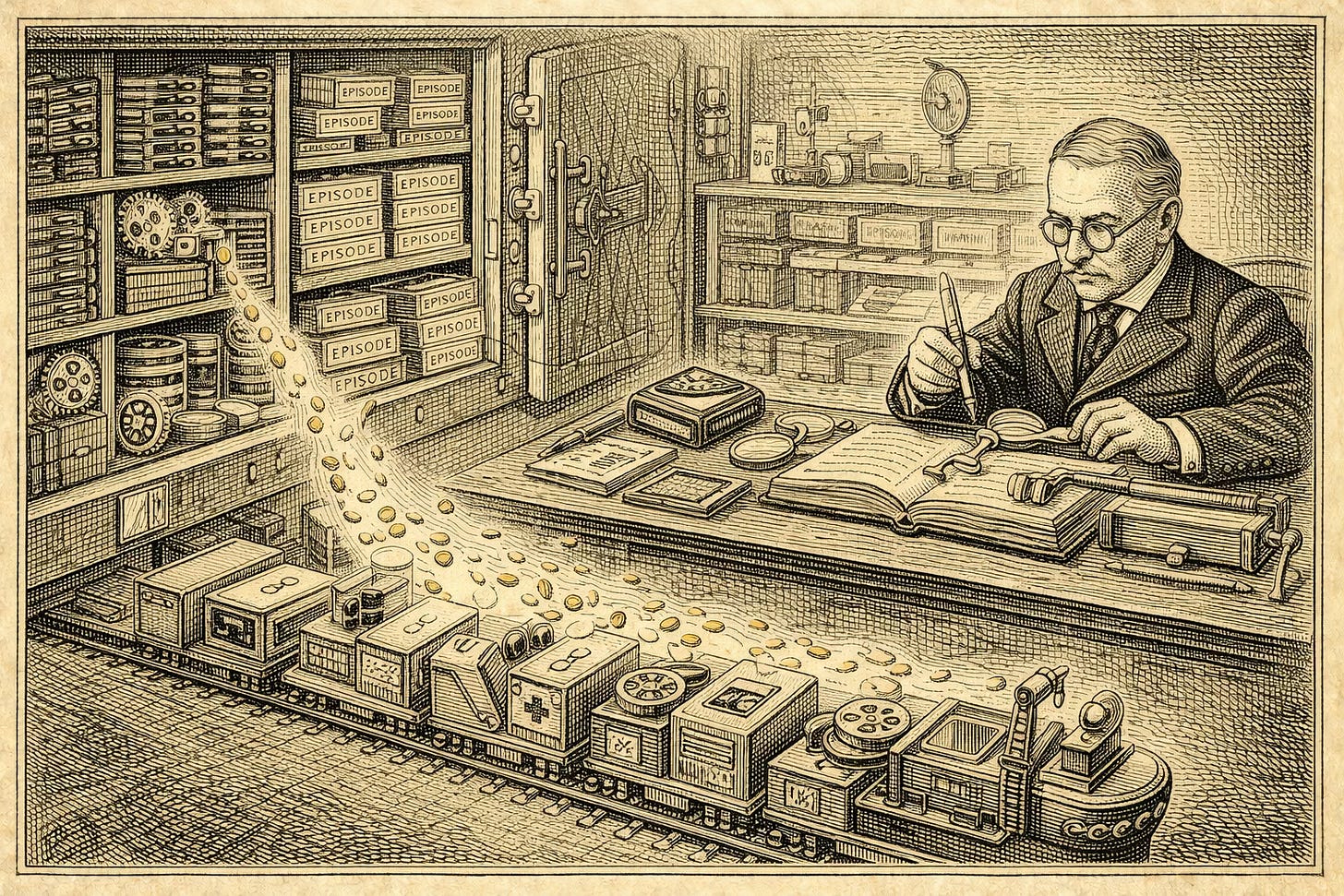
Spotter’s portfolio metrics suggest they are. Their catalog generates 88 billion monthly watch-time minutes, with 71% consumed on CTV. That’s stable, recurring, ad-supported revenue from content that’s already been produced. The production cost is sunk. The cash flows persist.
The lending opportunity lies between what the catalog already earns and what it could earn at CTV rates as the CPM gap closes.
The Credit Structure That Doesn’t Exist Yet
Here’s where the real opportunity sits.
Someone will eventually build the production financing infrastructure for creator content. The model is obvious in retrospect, which is usually the best indicator that it’s about to happen.
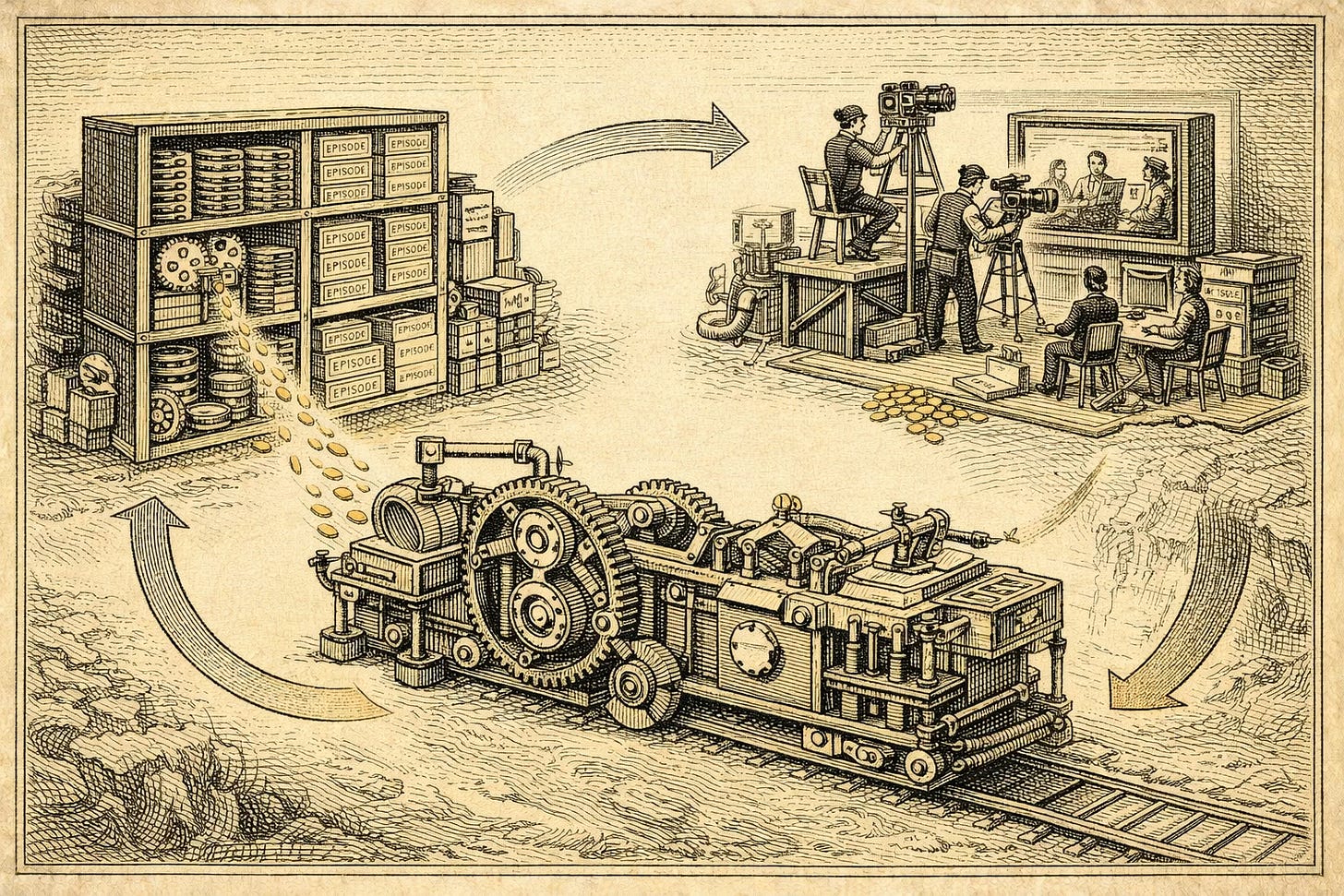
The structure looks something like this:
A creator has a proven catalog generating predictable cash flows on YouTube. Call it $50K/month in AdSense revenue from back catalog alone. That cash flow is the baseline. It’s verifiable through YouTube Analytics. It’s not going anywhere unless the creator deletes the videos or YouTube disappears.
The creator wants to produce a new series. Production cost: $500K. They could wait six months, save up from AdSense, and fund it themselves. That’s what most creators do. It’s also why most creators never scale beyond what their current cash flow supports.
Traditional financing would require collateralizing the catalog. But that’s not how Spotter works. They license the catalog revenue, not the catalog itself. Banks don’t understand the asset at all. They see irregular income from something called “AdSense” and close the file.
A properly designed credit facility advances production costs against the incremental cash flow generated by the new content. The underwriting isn’t based on hoping the new series goes viral. It’s based on the creator’s historical performance metrics: average view count, retention curves, CPM by content type, and audience growth trajectory.
A creator with 2 million subscribers and a catalog of 200 videos generating $50K/month has a floor. If they’ve averaged 500,000 views per video over three years, the next video will likely do the same. The variance exists. But the central tendency is knowable.
The new series is upside. The catalog is collateral.
If the new series works, it becomes part of the catalog and generates its own cash flow. The creator pays down the facility and borrows again for the next production. The flywheel spins. Each successful production builds the catalog, which supports the next draw.
If the new series underperforms, the catalog cash flow covers the debt service. The creator doesn’t lose their channel. The lender doesn’t take a total loss. The structure is designed for the reality that not every video goes viral, but creators who consistently produce tend to consistently earn.
The baseline revenue from existing channels is what you underwrite against. The new content is upside, not collateral.
This isn’t theoretical. It’s how film financing has worked for decades. The difference is that Hollywood developed specialized lenders who understood the asset class. The creator economy hasn’t. Yet.
Production capital that understands what it’s actually funding. That’s the gap.
Slow Ventures’ $64.3 million Creator Fund I is a step in this direction. So is Sound Royalties expanding from music into YouTube production. But nobody has built the equivalent of a film lender or a completion bond company for creator content at scale.
The ones who do will be positioned for a market where the media industry's capital structure finally catches up with where the audience already lives.
The Ad Dollar Migration Is Inevitable
The audience has already moved. The money will follow. The question is timing.
In Q1 2025, brands spent 43% of YouTube ad campaign dollars on TV screens. Nearly double the 24% share a year earlier. For the first time, YouTube CTV ad spending surpassed mobile.
According to IAB data, 36% of CTV dollars in 2025 are reallocated from linear TV budgets. Another 36% comes from social media. The migration is already happening.
YouTube CTV ads drove over 1 billion conversions in the trailing twelve months as of mid-2025. The performance case is building.
62% of U.S. agencies plan to use YouTube on TV screens, with 69% expecting to increase CTV campaigns year-over-year. The institutional resistance is cracking.
The obstacles are real but temporary.
Brand safety concerns will fade as third-party verification improves. The 80% of CTV ad buyers who report significant brand safety concerns are responding to a solvable problem, not a permanent feature.
Measurement fragmentation will consolidate. Cross-screen frequency management is a technical challenge, not an economic one.
Generational change will do the rest. The media buyers who grew up treating YouTube as “social” are aging out. The ones replacing them grew up watching MrBeast on their living room TVs.
When the gap closes, creator content will command CPMs closer to comparable premium inventory. That’s not a prediction. It’s arithmetic.
What the Market Is Telling Us
YouTube generated over $60 billion in annual revenue in 2025. Larger than Netflix’s $45 billion. More than the combined ad revenue of Disney, NBCU, Paramount, and Warner Bros. Discovery.
Spotter held an upfront event to convince brands that creator content is television. Samsung TV Plus launched 10 creator FAST channels and signed the first original content deal with a creator studio. Netflix signed Jordan and Salish Matter to what it called its biggest creator deal yet. Tubi onboarded 10,000 creator titles and hired TikTok’s former creator marketing head to build out the pipeline.
The demand signal is clear. The infrastructure signal is not.
Premium CTV sells at $25-46 CPMs. Creator CTV sells at $8-10. That’s a gap the market will close because gaps this obvious don’t persist forever. The audience doesn’t know it’s watching “discount inventory.” The attention is the same. The engagement is often higher. The pricing will converge.
Traditional TV production has deficit financing, completion bonds, and institutional capital. Creator production has bootstrap economics. That’s a gap the market should close because the audience economics now justify the capital.
Dude Perfect raised $100+ million at a $400 million implied valuation. The Try Guys built their own streaming service to stop operating at a loss. Smosh was acquired, grew, was bought back, and doubled its headcount. Mythical participated in an $82.5 million acquisition. Mark Rober is funding a $30 million curriculum out of pocket while building a Netflix show.
The creative companies are scaling. The financial companies haven’t caught up.
This is the moment before the infrastructure exists. The moment when the opportunity is most obvious to the people paying attention and least obvious to the institutions that would normally provide it.
The Spotter Showcase coined a term: “Creator TV.” The term is accurate. The financing should follow.
The Questions Nobody Is Asking
If YouTube commands more of American television viewing than any single network or streaming service, why are brand dollars still allocated as if it’s a social platform?
If creator catalogs generate cash flows that persist for years, why are those cash flows treated as unfinanceable?
If MrBeast’s production budgets rival those of cable television and his audience exceeds that of most streaming premieres, why is he self-financing?
If Spotter can license catalogs at scale, why can’t someone lend against production at scale?
If Mark Rober employs 100 people and finances a $30 million curriculum out of pocket, why can’t he access the production capital that any mid-tier TV studio takes for granted?
The audience moved to the living room. The viewing behavior became indistinguishable from television. The content quality scaled to match. The production budgets caught up.
Capital is still standing in the lobby, checking its phone.
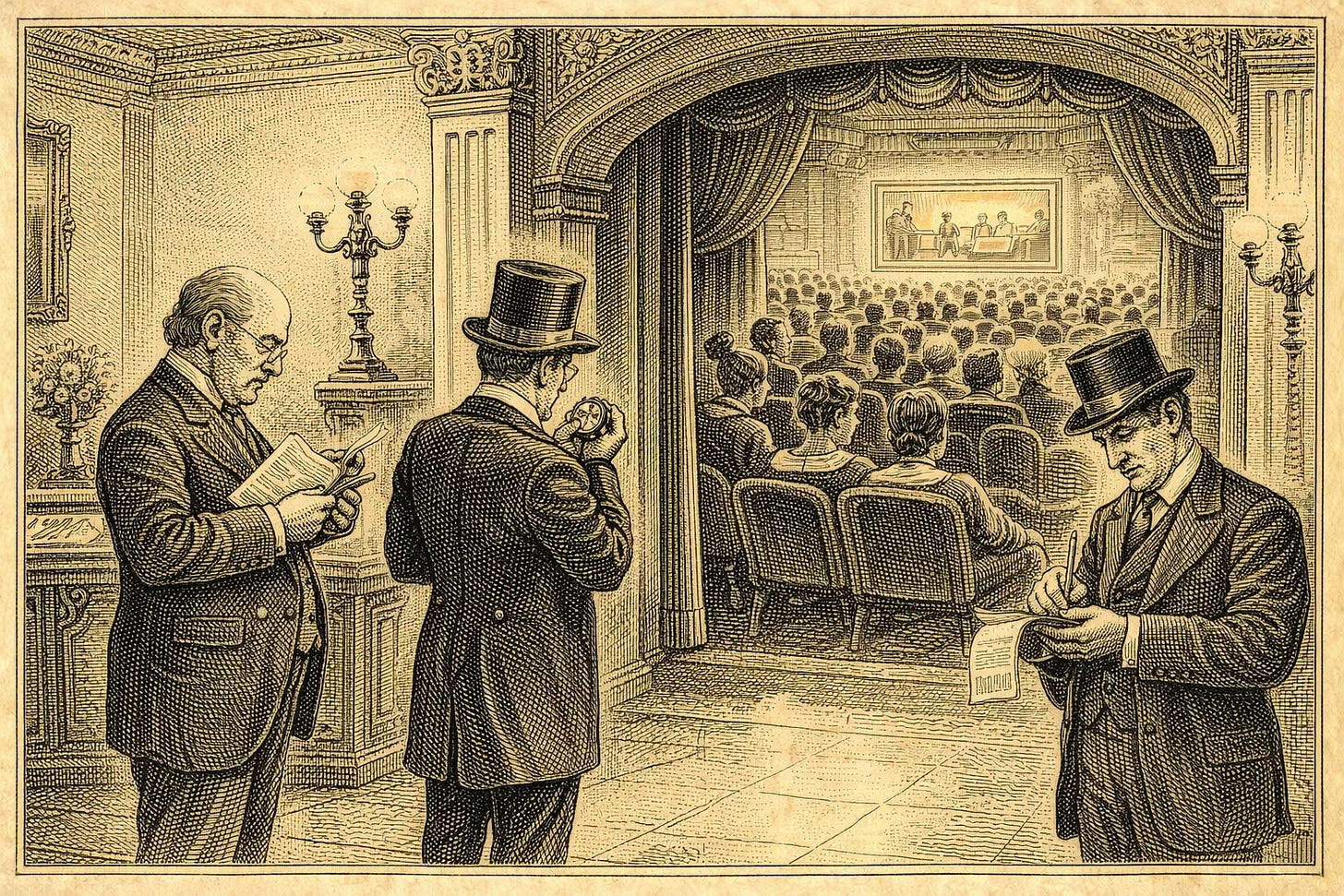
The audience moved to the living room. The viewing behavior became indistinguishable from television. The production budgets caught up. The CPM gap will close because gaps this obvious don't persist forever.
The financing infrastructure is the last piece. Whoever builds production credit for creators reaching television-scale audiences owns the asset class at the moment the capital economics finally catch up with the audience economics.
Attention Capital, syndicated through State of Streaming, tracks where that infrastructure gets built — and every deal that moves it forward before the rest of the market figures it out.
Subscribe to State of Streaming for more great analysis like this.
Get the SOS. Brief
The sharpest streaming intelligence, delivered to your inbox.