Mind the Gap: Streaming Audiences Wait Almost Two Years Between Seasons. Ampere Analysis and PlumResearch Just Found a Way to Monetize the Wait.
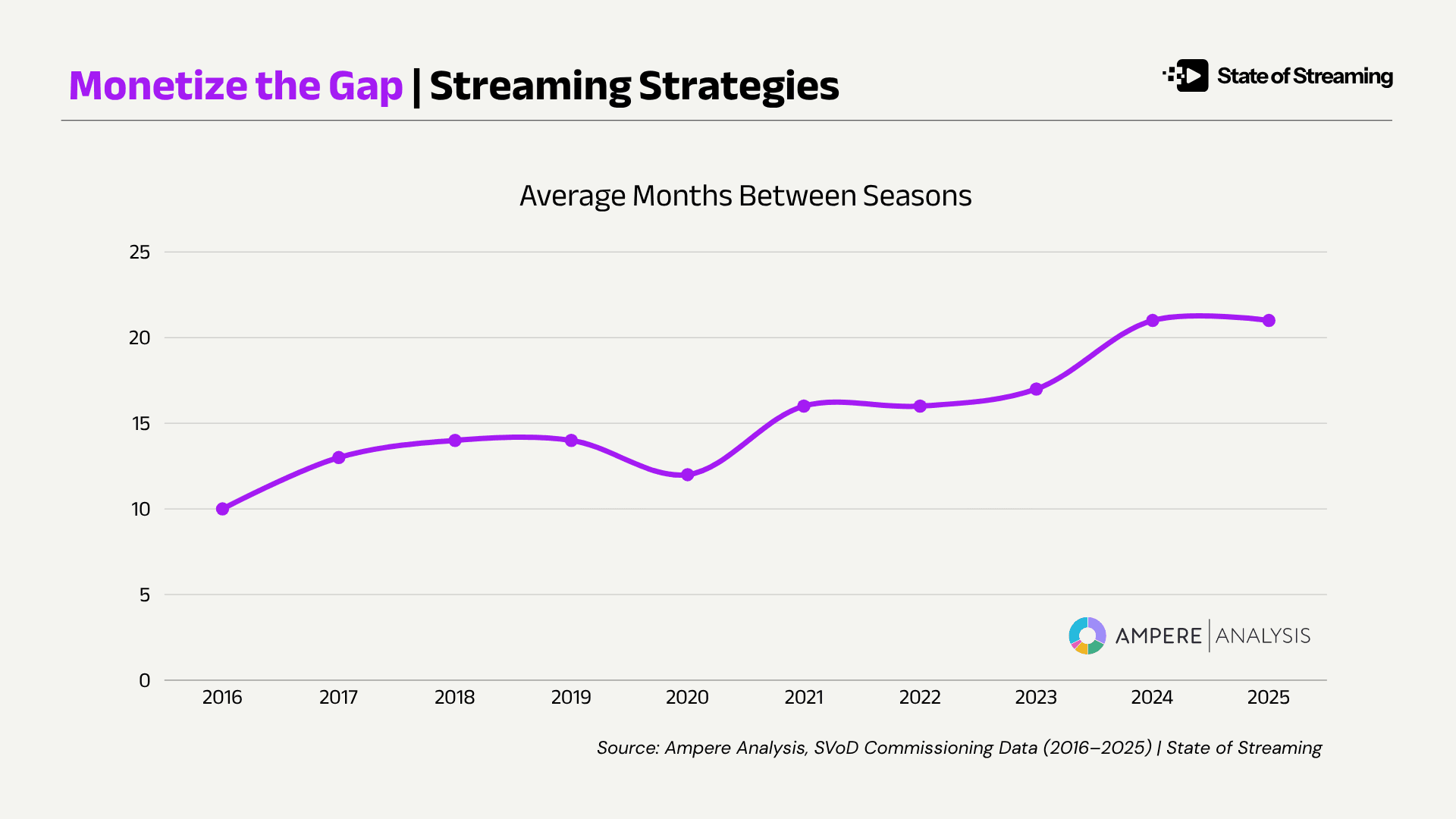
The average gap between seasons of scripted streaming originals has nearly doubled — from 12 months in 2020 to 21 months in 2025. Ampere Analysis published that finding on May 27th. The same day, it acquired PlumResearch, a behavioral measurement platform tracking 21 million panelists across 37 million devices in 75+ markets.
What the Data Shows
Longer gaps aren't just a production reality. They're functioning as a retention strategy — whether platforms intended that or not.
Shows with gaps exceeding 30 months between seasons achieved the highest engagement in their premiere month. Severance (Apple TV) and Wednesday (Netflix) generated nearly 2X average engagement levels despite lengthy waits. Stranger Things (Netflix) viewing rose 300% in the second half of 2025 ahead of its fifth and final season — driven by new viewers discovering the show and existing fans rewatching earlier seasons.
Scarcity is generating demand. The industry stumbled into it. The data suggests it's working.
The risk sits underneath. In Q1 2026, 54% of U.S. subscribers said they'd cancel a service they weren't using frequently enough. Long gaps drive engagement spikes at premiere. They also drive churn in the months between. Platforms are managing both without a reliable way to measure the net effect.
Christen Tamisin, Senior Analyst at Ampere Analysis:
"Extended gaps may generate anticipation around flagship titles, but they can also encourage audiences to cancel subscriptions and return only when major shows are back on screen."
What PlumResearch Changes
PlumResearch's Showlabs platform measures what happens between seasons. Reactivation data. Completion rates. Binge patterns. Share of viewing across platforms. Profile-per-subscriber data across 75 markets and 11 major streaming platforms including Netflix, Max, Disney+, Amazon, Apple TV, Peacock, Hulu, Tubi, Pluto, Roku, and Crunchyroll.
The Missing Data Layer
Platforms currently know when subscribers cancel. They don't have reliable visibility into the behavioral signals that precede cancellation — the declining session frequency, the shift to competitor platforms, the early-season rewatch that signals a returning fan versus a churning one.
Richard Broughton, Executive Director & Co-founder of Ampere Analysis:
"Plum's approach combines device-agnostic tracking, large panels, and rich behavioral metrics to deliver practical value for media clients."
Combined with Ampere's existing title-level data and market sizing, the merged entity can now connect what audiences do during the gap to what happens when the show returns.
What To Do With It Today
Three decisions this research should change immediately:
Genre-specific production timelines. Sci-Fi and Fantasy audiences tolerate long gaps and return with higher engagement. Comedy audiences don't. Crime and Thriller performs consistently regardless. Blanket production policy across genres is leaving engagement on the table.
Program the gap deliberately. The Stranger Things spike wasn't luck. It's what happens when catalog depth and algorithmic surface area keep an audience discovering and rewatching between seasons. The gap is programmable. Most platforms aren't treating it that way.
Identify at-risk subscribers earlier. The 54% churn-risk figure is a data problem. The subscribers most likely to cancel aren't disengaged rather they're deeply engaged with one show, but take a hiatus with the show when it's between seasons. That's a completely solvable retention problem if you can see it coming.
The platforms that learn how to program the wait will retain the subscribers everyone else loses while they're waiting.
Read about 'How Streamers Show Up in AI Search' next
Get the SOS. Brief
The sharpest streaming intelligence, delivered to your inbox.