The Great Transatlantic Streaming Divide: An Interview with Hemant Soni and Rahul Bhatia
"The US is built to monetize, and the UK is built to balance. - Hemant Soni"
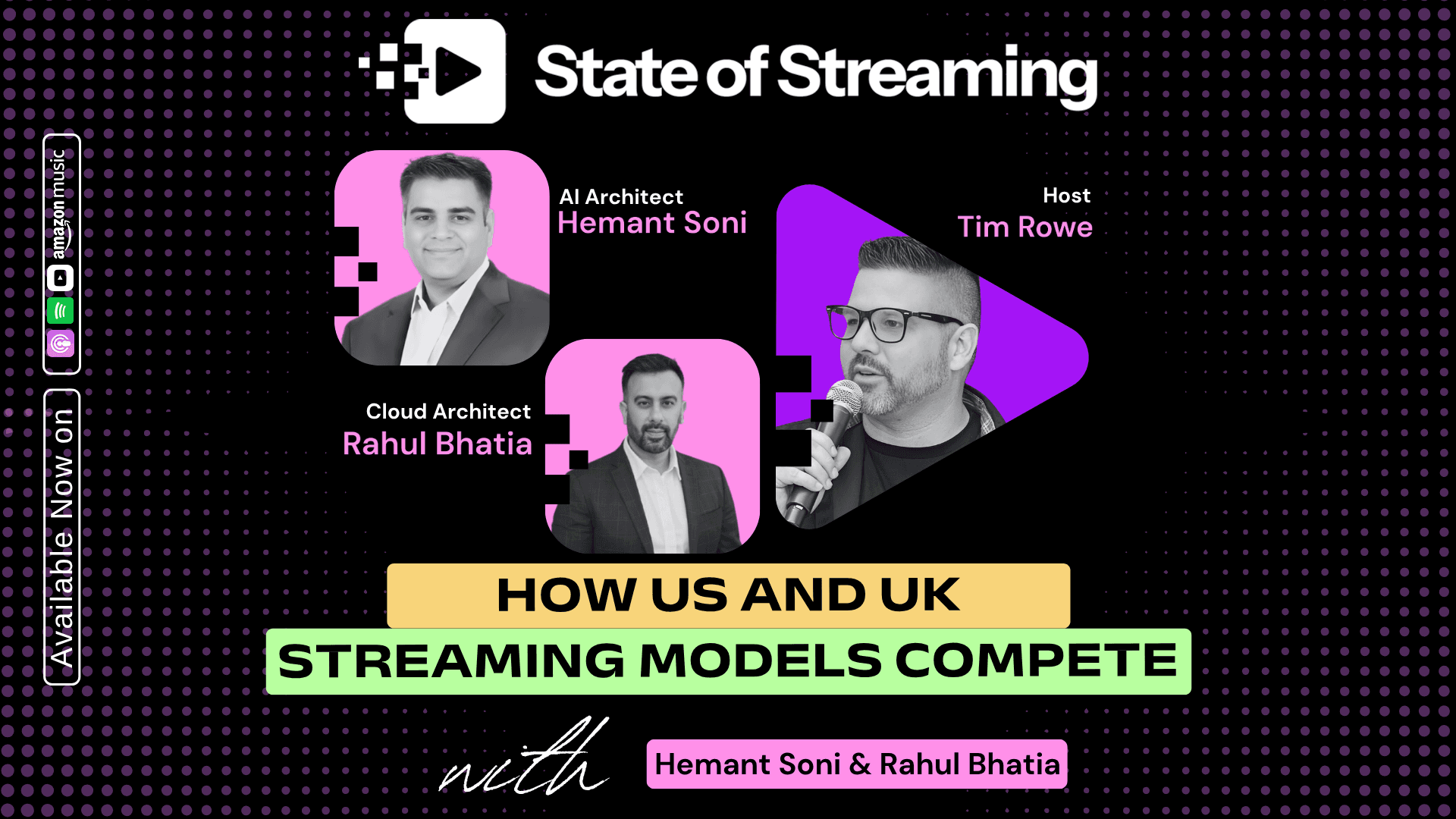
In today's conversation, I sat down with cloud and media experts Rahul Bhatia and Hemant Soni. Rahul and Hemant take us behind the scenes of how cloud architecture, AI, and regulation are shaping the future of streaming television on both sides of the Atlantic. We discuss the structural differences between US "built-to-monetize" models and UK "built-to-balance" public service broadcasters, how public cloud and serverless setups handle massive live traffic spikes, and the rise of full-length AI filmmaking like the "Cully Hill Boys". We also discuss Netflix's massive ad-tier expansion, how agentic AI is taking over advertising operations, and why your next streaming bill might charge you for cloud storage.
Commercial Engine vs. Public Good
Tim Rowe: What would you say is the biggest structural difference shaping innovation and growth in the UK streaming market?
Rahul Bhatia: The UK industry is probably public sector driven. Whereas in the US, I've seen it's more private; there are a lot of private companies enhancing media and streaming opportunities, and the streaming industry is very much funded by private equity companies. In the UK, it's more public sector, like broadcasters such as BBC and ITV.
Tim Rowe: And Hemant, how would you compare that to the US? Does the incentive structure change?
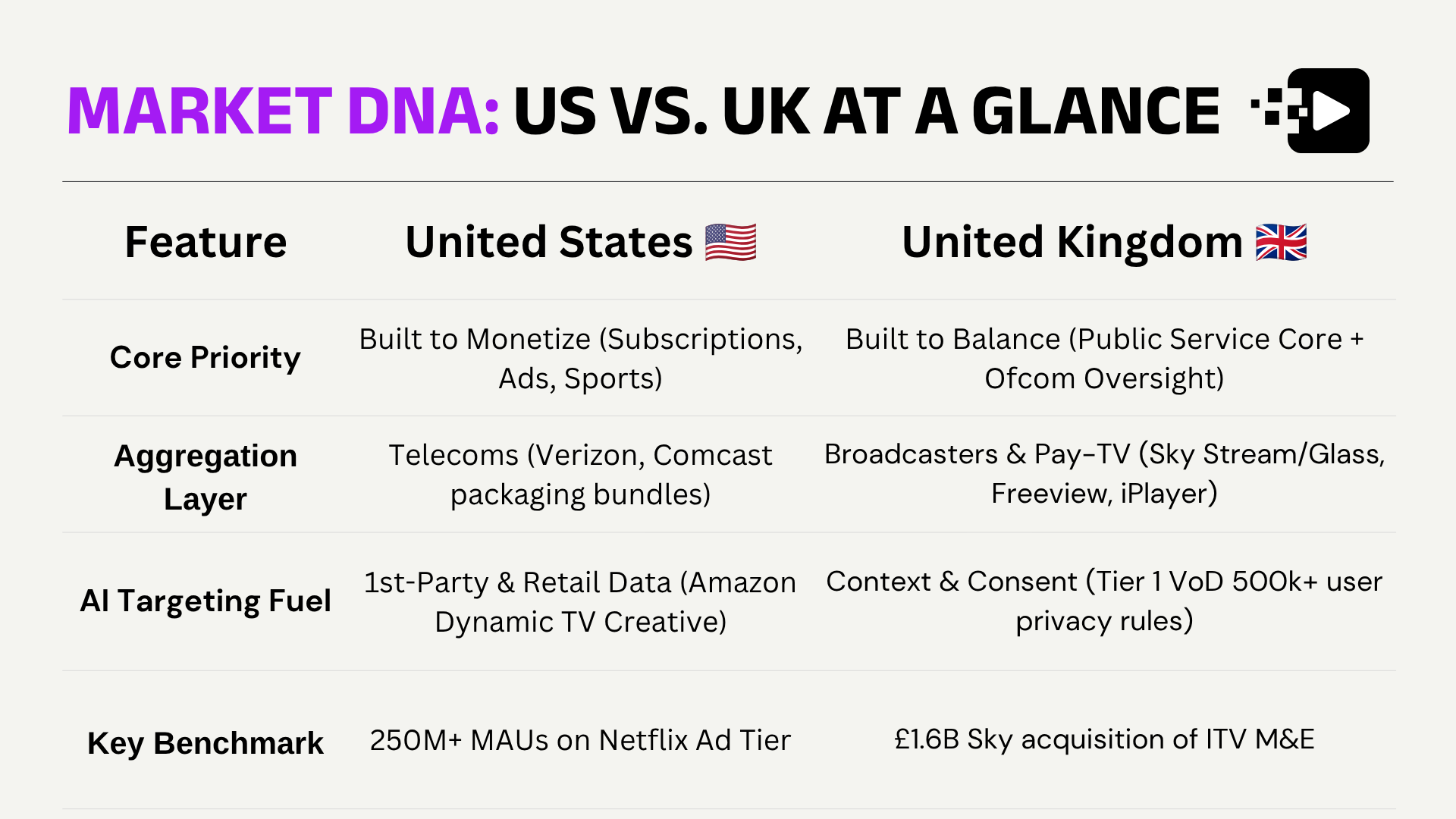
Hemant Soni: The US is more built to monetize. We have scale, advertisements, sports, and telecom as the aggregator. The critical element is how to make money from retention. Whether you take Netflix, Amazon, or Disney, they all compete on subscription plus a fast-growing ad business.
The UK is built to balance. It's a commercial market placed on top of a public service broadcaster, which has a licensing fee. To summarize, it's commercial versus public service as a DNA. Regulations come into the design as input, not an afterthought.
Tim Rowe: Commercial versus public service, who is doing a better job servicing the customer?
Hemant Soni: Both are very different. In the US, streaming is more of a commercial game: subscriptions, advertising, sports, first-party data. The UK is a commercial engine on top of a strong public service core—BBC, ITV, or Channel 4—plus tighter regulations.
Rahul Bhatia: Streaming media opportunities in the UK are partially publicly funded. The government plays a big part here, such as the BBC being partially funded by the government. It's pretty much publicly driven streaming in the UK.
Cloud Architecture, Spikes, and Regulations
Tim Rowe: As streaming becomes increasingly cloud-native, what architectural decisions are most critical for balancing scale, reliability, and regulatory requirements?
Hemant Soni: Don't build the cloud architecture on what you can rent. Design on the spike that comes in, not on averages. Netflix runs on public cloud, so it scales for big NFL night games without owning the infrastructure. Serverless architectures on public clouds allow platforms like Netflix or Prime Video to scale.
Tim Rowe: Rahul, from the UK perspective, how is that decision-making different?
Rahul Bhatia: The UK is heavily regulated based on what I've seen in cloud transformation programs. It's heavily regulated in the UK, expecting strict cloud infrastructure for streaming opportunities. Any company doing streaming now must have a cloud exit strategy in place. GDPR is a big hoo-ha in the UK.
From Revenue Engines to AI Cinema
Tim Rowe: Do you believe AI is delivering greater value as a revenue engine through personalization and advertising, or as a service enhancer on the back end?
Rahul Bhatia: It's definitely generating growth for companies on revenue streams. Unlike traditional forecasting models, we now have AI tools. AI can predict your revenue stream by looking at your five-year forecasting model and give you growth chunks over the next five to ten years. AI definitely drives the revenue stream.
Tim Rowe: So more on the operational side, where AI creates the unlock.
Rahul Bhatia: Companies are focusing on the operational side. When giving products to consumers, there is a better way of looking at things—how you see an ad. Before, in a TV commercial, you saw natural colors and a human touch. Now, when visualizing an ad on Netflix, you don't know whether that's AI or if an actual scene is being predicted. Consumers are seeing benefits in terms of new experiences.
Tim Rowe: Are y'all familiar with Higgsfield Cinema Studio? This is from a completely AI-generated full-length 114-minute film called the Cully Hill Boys. It gives you markdown files, prompting instructions, and shot lists. Is that one of the more customer-facing applications of AI in streaming you're seeing?
Rahul Bhatia: Yes, definitely. You don't know whether what you're watching is real or artificial intelligence innovation. In live television, there is less AI because it's real-time. In a pre-shot movie like this, they use artificial intelligence capabilities to draw that picture, et cetera.
Netflix, Agentic AI, and The Storage Bill
Tim Rowe: Hemant, is AI currently delivering greater value as a revenue engine through personalization and advertising, or as a service enhancer on the back end?
Hemant Soni: The UK market is more about AI in discovery and public value with fewer advertisements. Players like ITV run commercial loops but control the data, whereas BBC is on public value. In the US, it drives both revenue and experience. Recommendations keep you watching, and Netflix's ad tier passes close to 250 million monthly ad viewers. Experience and monetization feed each other in the US market, whereas the UK is split between public value and a commercial version.
Rahul Bhatia: I absolutely agree. British streaming use cases for AI are commercially focused on value for public services, with BBC and ITV following those standards.
Tim Rowe: Is Netflix really a technology company?
Rahul Bhatia: They are leaning towards that now. Because AI use cases have come into picture, like agentic AI with AWS cloud services, Netflix is implementing agentic AI. You get a list of videos based on viewing history or prompt patterns. Agentic AI is a big use case in streaming, along with heavy back-end database storage investments.
Tim Rowe: How will AI reshape streaming monetization strategies over the next three to five years?
Hemant Soni: Audience is at the center, and ad revenue reshapes itself without privacy breaches. Amazon Dynamic TV Creative can switch streaming ads, calls to action, or add-to-cart prompts using shopping data. Ads become smarter with what kind of data is fueled into it.
Tim Rowe: In a more regulated UK environment, how does AI show up in streaming monetization over the next three to five years?
Rahul Bhatia: Privacy will be a big use case, heavily invested in by making sure privacy is maintained to the highest level, like GDPR. Agentic AI platforms will play a key part in the front end, whereas edge computing will play a big part in back-end data storage. Soon, streaming companies will realize that providing massive database storage for consumers becomes costly to maintain. They will start charging you for storage, and that is going to be the next big change in streaming.
Hemant Soni: Agentic AI is racing ahead commercially, moving beyond content creation into advertising operations. AI agents can decide where to place ads, buy advertising space, manage budgets, and optimize campaigns automatically. Under regulations like the UK Media Act, platforms with over 500k users must look into context and consent. The US is focused on making ads smarter with user data, whereas European models focus on making ads smarter with content context while keeping privacy first.
Want to watch or listen to the entire conversation?
Get it here: https://podcast.stateofstreaming.com/hemant-soni-rahul-bhatia-s5e9
Get the SOS. Brief
The sharpest streaming intelligence, delivered to your inbox.