Interest, Intent, Attention: How the 2026 Emmy Winners Were Made

We aligned three datasets on this year's Emmy winners and found a few things we didn't expect.
We wanted to answer two questions: how does a show win an Emmy, and what is the win actually worth? So we compared data from Reelgood, Roku and TVision on the 2026 winners, and Roku's Head of Analytics & Insights, Jon Merkin shared an exclusive post-ceremony perspective with us.
Three Datasets and an Emmy's Exclusive Experience
Reelgood shows us which shows people were curious about — think of this like Google Trends for streaming. It doesn't tell us who watched what or how but it gives us a perspective on where discovery and interest begin for the viewer.
Roku shows which shows people searched for, across their more than 100 million households and streaming app universe.
TVision shows eyes-on reach and attention. What people actually sat down and watched, and how engaged they actually were with the content on the TV.
Looper Insights takes you inside the journey with two exclusive experiences:
1. Winners stayed on the charts for months
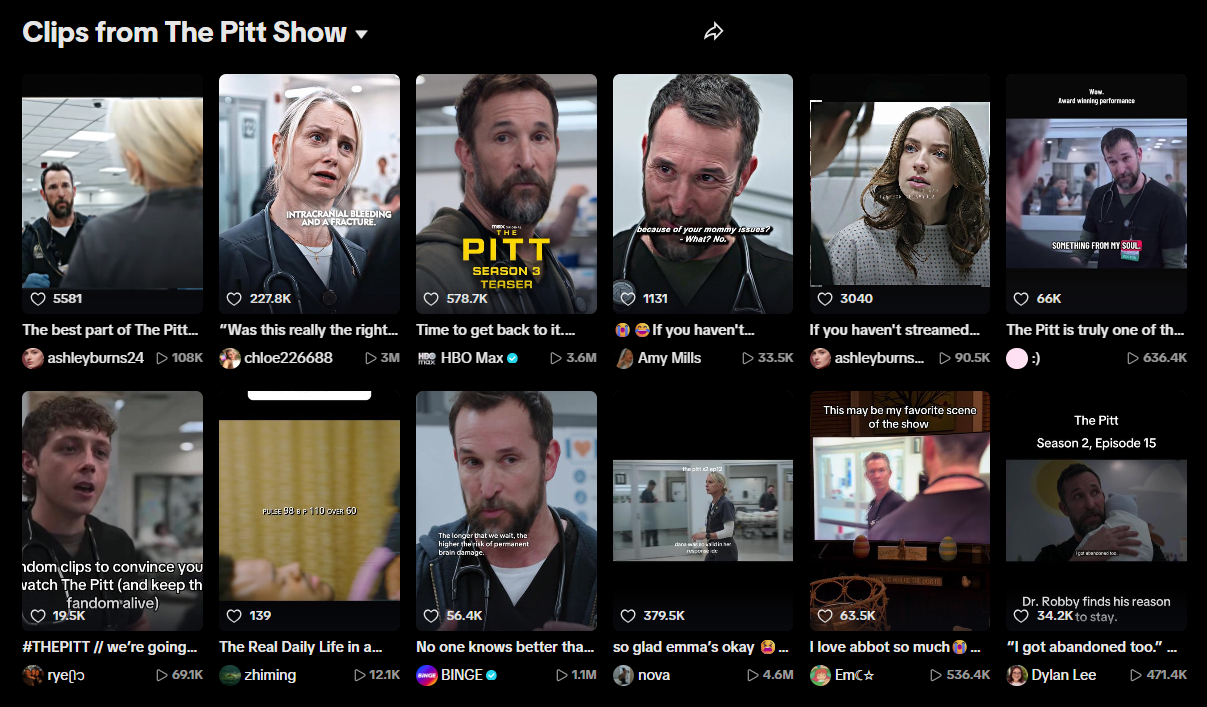
The Pitt spent 17 straight weeks in Reelgood's Top 10 this year, more time near the top than any other show during the eligibility window. It won Best Drama again.
Widow's Bay premiered late, in April, but stayed in the Top 3 for 11 weeks straight, right through the summer when voters fill out their ballots.
Pluribus had the biggest peak, six weeks at No. 1, but it peaked in November. It did win Lead Actress and Writing but not Best Drama.
Takeaway: Sustained popularity, especially in the summer, matters more than one big spike in interest. Short clips on social are how shows stay in the conversation between episodes.
2. All three winners were big in their hometowns
Before the ceremony, Roku mapped where each nominee had its biggest fans. All three series winners over-indexed in the places they're set:
DTF St. Louis: Missouri searched for it 75% more than average.
Widow's Bay: Massachusetts, 54% more.
The Pitt: Pennsylvania, 15% more.
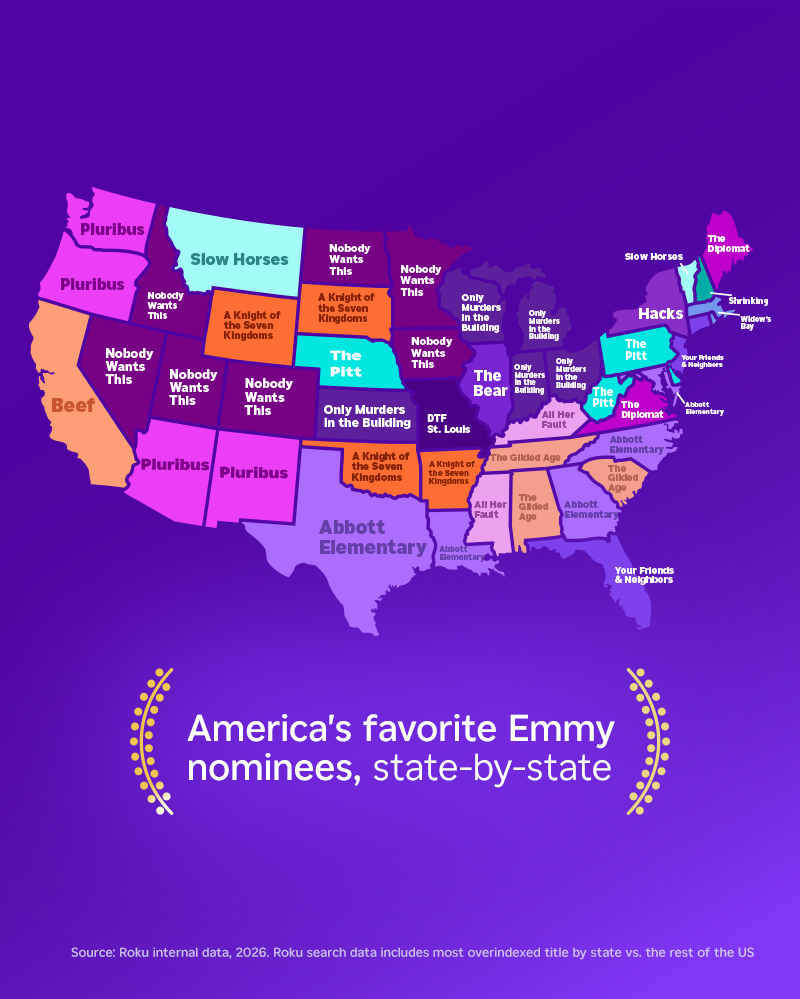
It's not a sure thing. The Bear did well in Illinois and still lost. But we found it interesting that the national search leaders in Comedy and Limited Series, Abbott Elementary and All Her Fault, both lost, while every winner had a hometown following.
Apple leaned into this with a Widow's Bay billboard on a barge off Cape Cod.

3. The win drove a bigger spike than the nomination, or even the premiere
Read Roku's Emmy Analysis here
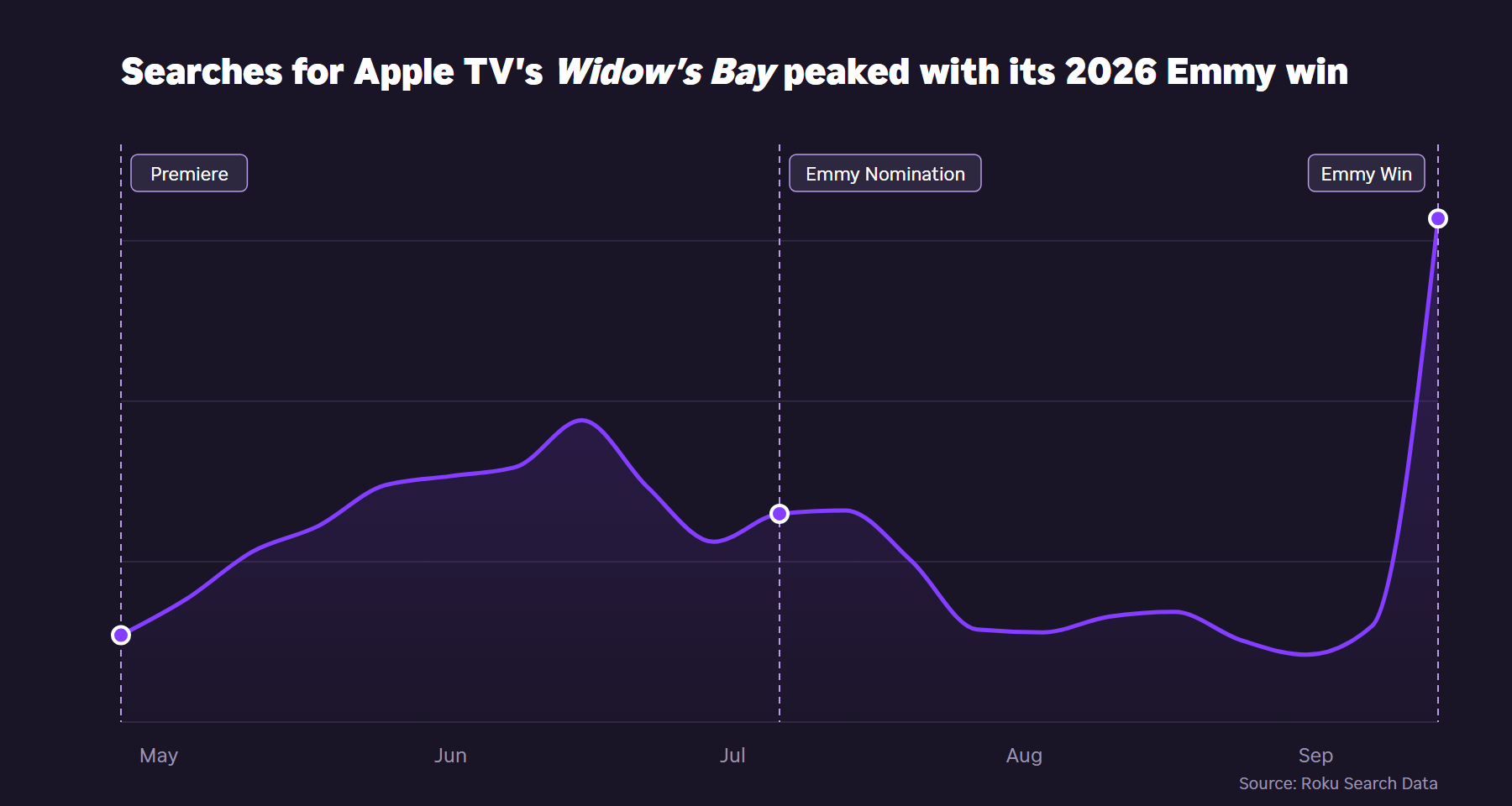
Searches for Widow's Bay leveled off after the July nominations and faded in August. After the win, they jumped more than 420% to the highest week the show has ever had, bigger than its premiere. The Studio did the same thing after winning last year.
Roku Head of Analytics and Insights Jon Merkin put it this way:
With so much content available to watch, even ardent streamers miss shows. An Emmy win can drive a “second premiere” for a title, especially among new viewers, who are (re)introduced to the title. The big winners from the past two Emmy awards – The Studio and Widow’s Bay – both had their highest-ever search volume on Roku in the week following their wins. This definitely resonates with me – with all the noise of TV recommendations on social media, and trying to keep track of which friend told you about which show to watch, the singularity and prestige of an Emmys win breaks through as the ultimate indicator of must-watch TV.
4. Acting wins shown on TV mattered most
This one is new, from Roku data shared exclusively with SOS for this analysis. This year, six acting categories weren't televised as part of the awards show.
Why it matters: the shows whose acting wins aired got more searches the next week than the shows whose wins didn't.
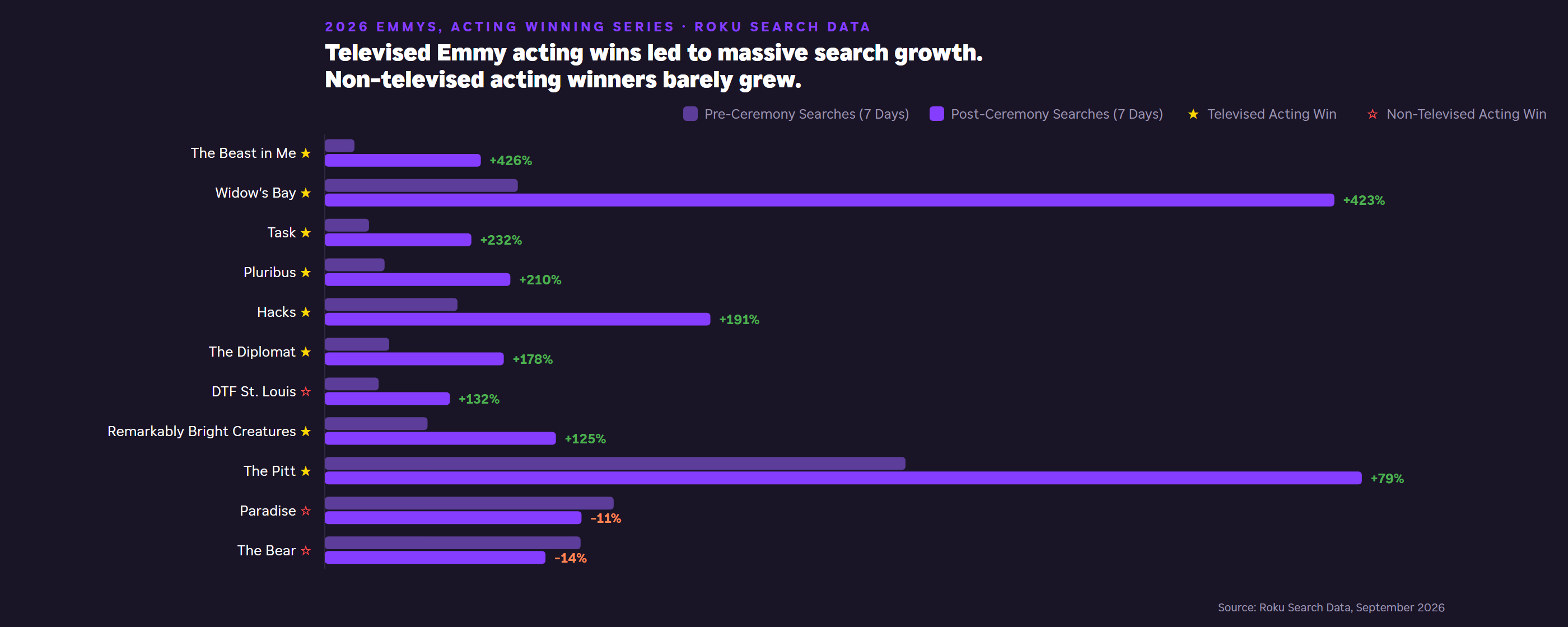
Shows whose acting wins aired saw searches grow roughly 2x to 5x the week after.
Shows whose acting wins happened off camera grew much less. Searches for Paradise and The Bear actually fell.
The Beast in Me grew 426% after Matthew Rhys won on air. DTF St. Louis won Best Limited Series on air, but its acting wins weren't shown, and it grew 132%.
5. New viewers started with Season 1
TVision's data shows what people watched, and heading into the Emmys it wasn't the season being awarded. It was actually season one.
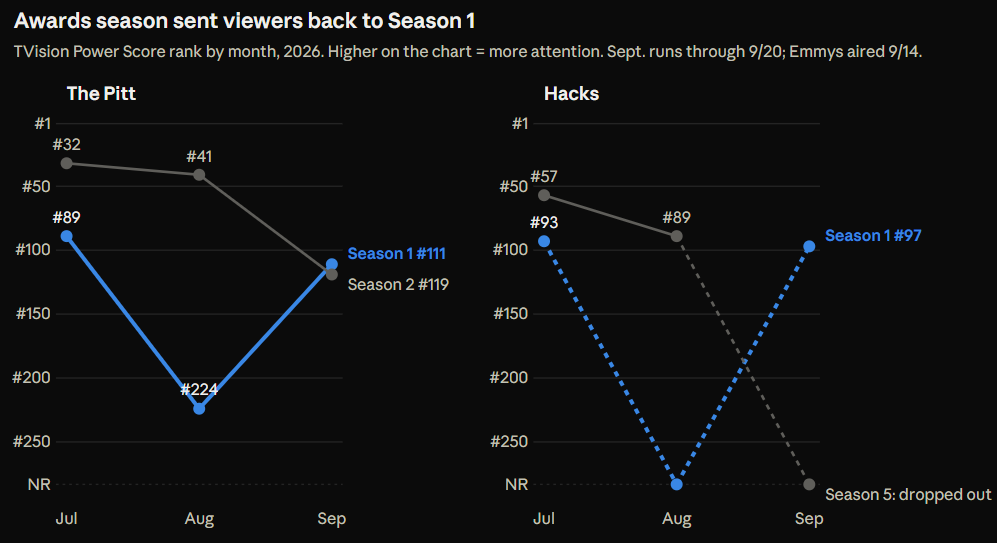
The Pitt Season 1 passed Season 2 in September eyes-on viewer attention. Hacks Season 1 came back into the rankings while the newest season dropped out. That validates Roku's finding that most Emmy searchers are new to the show, and new viewers start at the beginning.
Takeaway: During awards season, put Season 1 front and center on the connected TV (CTV) home screen.
6. A win brings in new households
The less known a show is before it wins, the bigger the bump. After the 2025 Emmys, Adolescence searches grew 14x, The Studio 5.7x, and The Pitt, already a hit, 2.8x. This year The Pitt grew 79%, from its established baseline — it and Widow's Bay were the two most-searched nominees the week after.
The audience changes too. Merkin says this about how an Emmy win shows up in viewership:
An Emmy win has a democratizing effect on viewership, helping zeitgeisty shows reach a mainstream audience where Hollywood hype may take longer to breakthrough. For example, when Adolescence won last year, it’s audience shifted from predominantly Urban and Coastal audiences, more to the Midwest and Southeast.
After Adolescence won last year, its searchers became 24% more Midwestern and 12% more Southeastern.
What it Means for Advertisers
Media buyers want to reach incrementally new households. A new Emmy winner does exactly that, which makes it an easy sell for Q4 and next year's upfronts. The useful question for any platform: how many new households did the win bring in, and where are they?
Who Came Out Ahead
HBO Max. It won Drama and Limited Series, owns the Season 1 episodes new viewers go back to, and has an ad tier to sell against them.
Apple TV won the most trophies. Widow's Bay set the comedy record with 14 Emmys. Pluribus took Lead Actress and Writing. Slow Horses took a directing trophy. But Apple TV carries no ad inventory, so it can't sell ads against the new viewers the win brings in. It gets subscribers, and that's it.
Netflix. No series win, but The Beast in Me had the biggest search jump of any acting winner.
Hulu. It led pre-show searches in Comedy but won no series awards, and its acting wins for Paradise and The Bear weren't televised.
Peacock. All Her Fault lost Limited Series; The Traitors won Reality Competition.
One to watch: DTF St. Louis. It was the least-known winner going in, so it should have seen the biggest bump. It didn't. We'll check TVision's October and November data to see whether the win turns into viewing.
Watch the official trailer here:
Want to Go Deeper?
Our three datasets show what viewers did. Looper Insights tracks what the CTV platforms did: which shows got the best spots on streaming home screens, measured in $MPV (Dollar Media Placement Value). Widow's Bay, for example, saw a 214% peak lift, including Apple TV's hero slot in August.
Looper's Data Labs team published two interactive stories on this. One walks through the 2026 winners platform by platform: Emmy Winners. The other uses 2025 results to make predictions for the Golden Globes and Oscars: Awards Playbook.
About the Data
Reelgood: weekly Top 10 show lists, January 2025 to September 2026. Roku: pre-ceremony data from its September 9 release; post-ceremony data and Jon Merkin's comments shared exclusively with SOS., comparing the week after September 14 with the week before. TVision: monthly Power Score rankings, July to September 20, 2026, showing relative attention, not audience size. Three winners is a small sample, so treat these as patterns, not rules. Winners via The Hollywood Reporter and NPR.
Get the SOS. Brief
The sharpest streaming intelligence, delivered to your inbox.