Vertical Video Isn't a TikTok Strategy. It's a Broadband Gap Strategy.
Every streaming platform rolling out a vertical video feed is being measured against TikTok but it's the wrong benchmark. What has not been reported is the audience acquisition argument hiding inside U.S. Census Bureau data — and its direct implications for where media buyers allocate inventory spend.
93% of American households own a smartphone. 76.5% have fixed broadband — cable, fiber, or DSL. The delta between those two numbers is 16.7 million cellular-only households that reach the internet through a phone and nothing else. No connected TV device. No fiber-backed living room.
Households earning under $20,000 have fixed broadband penetration of 80.6% — nearly 17 points below the 97.3% rate for households earning $75,000 or more. The advertisers with the most to gain from closing that gap are CPG, QSR, financial services, and telecom.
Traditional streaming does not reach those households where vertical video inside a premium streaming app does.
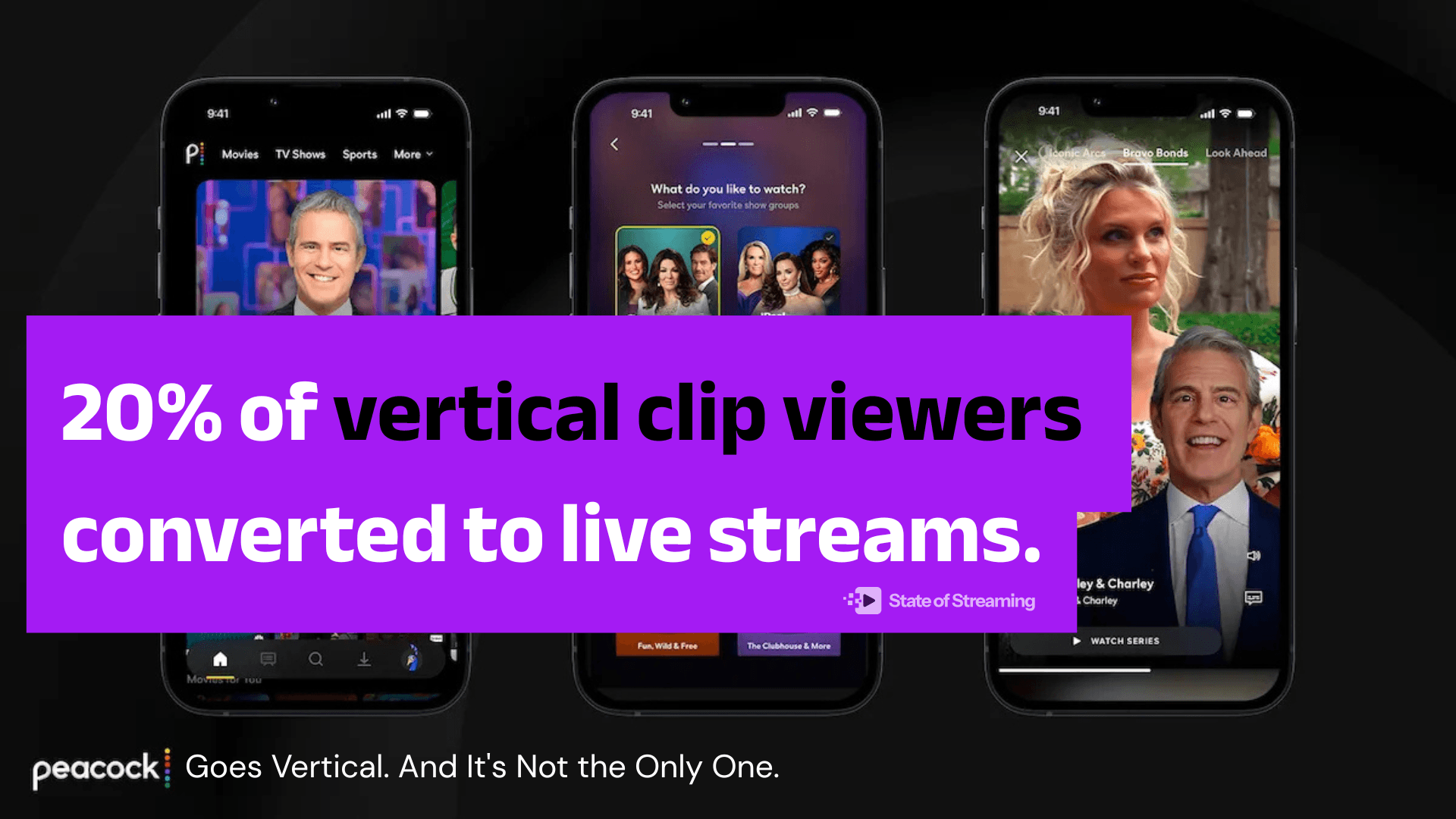
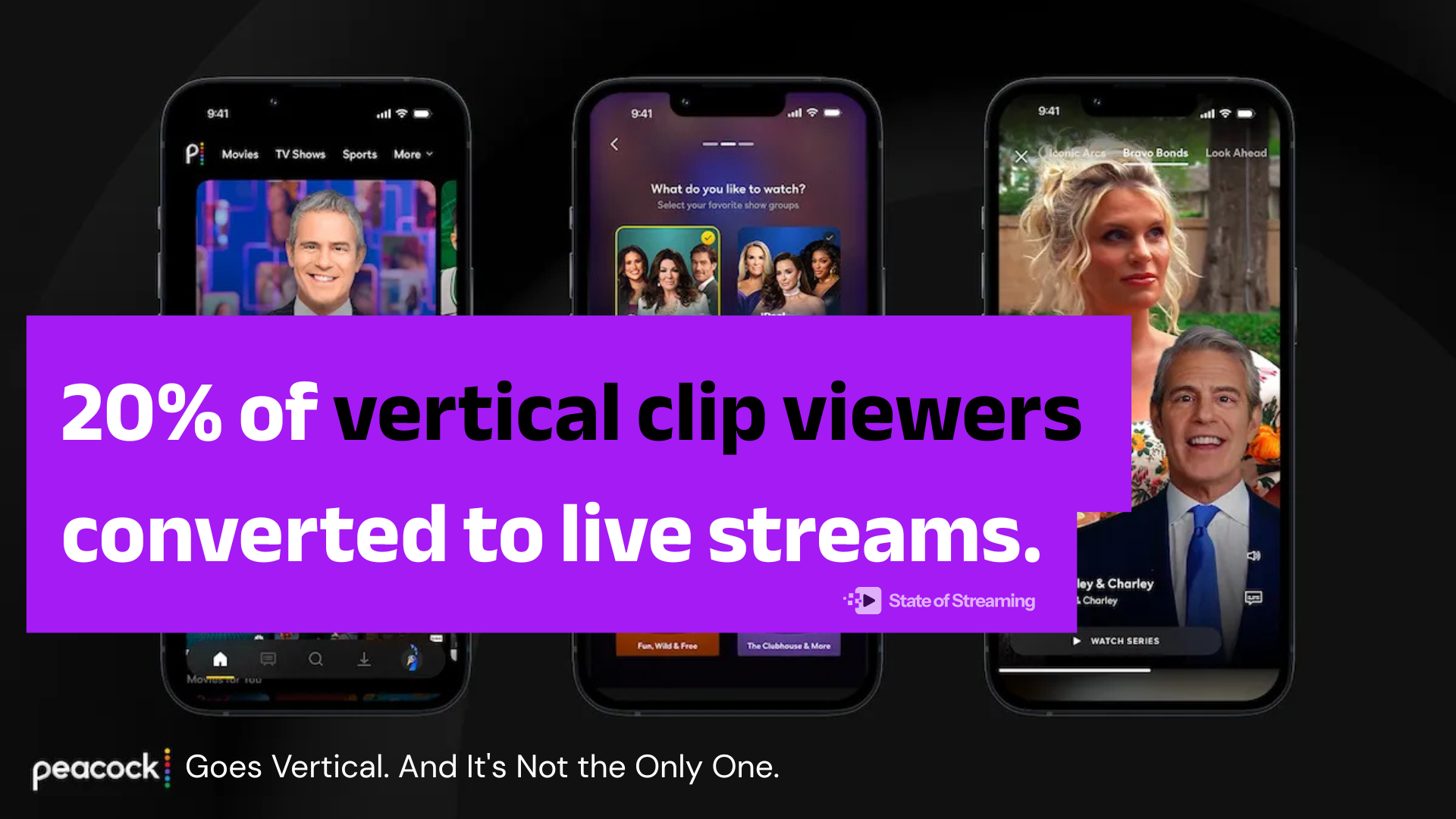
Disney+ Verts, Peacock's Bravo vertical feed, and Netflix's forthcoming mobile redesign are not chasing Gen Z attention spans. They are building acquisition infrastructure for a broadband-constrained audience the industry has quietly excluded from household reach calculations. The 20% conversion rate Peacock reported during the 2026 Winter Olympics — vertical clip viewers who navigated directly into the full live stream — makes the mechanism legible. Discovery is not the product. Conversion is.
Read Peacock Goes Vertical Next
The Standard Doesn't Exist Yet. That Is the Real Risk.
Vertical scroll sessions inside streaming apps generate behavioral signals with no standardized currency to price them against a completed-view CPM or a gross rating point. Disney's Brand Impact Metric, announced alongside Verts at CES, is building toward that bridge. It is not there yet.
State of Streaming's broadband analysis puts the addressable mobile gap at 16.7 million households — an audience that existing CTV measurement frameworks do not capture and upfront inventory packages do not price. The buyer who gets ahead of the measurement standard owns the inventory category when monetization arrives. The buyer waiting for a rating point equivalent will be negotiating from the back of the queue.
The Inventory Stack Media Buyers Need to Understand
First-party behavioral data generated by scroll sessions — what a user paused, rewatched, or added to a watchlist — is worth more to Disney Advertising and Netflix's ad suite as a targeting signal than a single CPM impression. The ad unit comes after the dataset matures.
Upfronts are around the corner. Disney, Netflix, and Peacock will all be in the room making inventory commitments. Buyers walking in without a vertical video thesis are already behind.
Get the SOS. Brief
The sharpest streaming intelligence, delivered to your inbox.