The Default Nobody Declared - Attention Capital | A Column by Josh Stein
Editor's Note
Attention Capital is a syndicated column by Josh Stein decoding the economics of media, sports, and platform ecosystems — where attention becomes enterprise value and the contracts behind the cash flow get priced like the credit they actually are. Programmatic ad markets continue to trade exposure without an underlying asset, while capital quietly reallocates toward documented audience habits. The default never gets declared on paper — it shows up in the ledgers as budgets move to where attention actually compounds.
In March 2017, JPMorgan Chase ran an accidental experiment on the entire advertising market.
The bank’s display ads had been appearing on about 400,000 websites in a typical month. It cut the list to roughly 5,000 preapproved sites and watched for damage. A cut of almost 99%. “We haven’t seen any deterioration on our performance metrics,” the bank’s chief marketing officer told the New York Times.
Two details give the story its teeth. The bank’s own review had found that of the 400,000 placements, only about 12,000 ever produced activity beyond an impression. And when Chase later loosened the list, it stopped at about 10,000 sites. Against 400,000, that’s the same experiment.
No single number has ever said more about what the money was buying.
The frame behind it is 30 years wide. On October 27, 1994, the first banner ad ran on HotWired, Wired magazine’s website. AT&T bought the slot and dared readers to click. About 44% of the people who saw it did. By 2018, the average click-through rate across Google’s display network sat around 0.46%, and broader display averages ran lower still.
Those two numbers are bookends, and they are honest only as bookends. A novelty format with zero clutter sits at one end; a mature network average sits at the other, 24 years later. Banner blindness lives inside that fall. So do mobile screens, the death of the accidental click, and the old truth that brand advertising never claimed to work through clicks in the first place. Concede all of it. Every explanation on the list leaves the same fact standing: the unit’s one public response measure went to zero, the unit’s price never noticed, and when a buyer finally audited the inventory at scale, the audit found nothing either.
The two findings belong side by side. Measured response fell toward zero across three decades. A 99% supply cut at one of the most measured advertisers on earth registered nothing. An industry can survive one of those. Both at once say something about what it actually sells.
Welcome back to Attention Capital.
In The Pipes Aren’t Built Yet, I argued the supply-side problem: attention produces documented cash flow, and the collection layer that turns it into rated paper is still missing. This essay is the demand side. It explains why the money is coming anyway.
It starts with a book. Tim Hwang’s Subprime Attention Crisis, published in 2020, called programmatic advertising a bubble built on systematically misrepresented inventory, and it just got a second life: an Italian edition landed in June 2026, and the six-years-later reviews keep circling the same puzzle. Hwang predicted a crash. The crash never came.
At TVREV in August 2026, Emanuele Landi resolved the puzzle. The default, he argues, already happened and never gets declared, because the system bills for exposure and never measures the attention it claims to deliver.
He’s right. And the reason he’s right is a flaw in Hwang’s own metaphor that six years of coverage walked past. This essay is about that flaw, and where it says the money has to go.
For the Attention-Constrained
The flaw in the metaphor.
Subprime broke because real debt was written against a real asset that failed under load, and the failure forced price discovery on specific days. Digital advertising has no day coming, because there is no asset under the paper. Exposure stood as a proxy for attention, and the proxy was the only thing anyone ever held. A market with no asset cannot crash on its collateral. It can only be abandoned.
The spot market.
Exposure is a commodity created by a page load, bought by the impression, and extinguished by delivery. The auction that trades it got smarter for 30 years while the measured response fell roughly a hundredfold, because optimizing the trading of a commodity does nothing to make the commodity worth more. And the market grades its own delivery: the platforms define the metric, sell the inventory, and certify the result. Facebook overstated average video watch time for roughly 18 months and settled the resulting lawsuit for $40 million.
The rotation.
The IAB puts U.S. creator economy ad spend at $37 billion in 2025, up 26%, growing about four times faster than the total media industry, from $13.9 billion in 2021. Global linear TV ad spend is down 28% since 2013 and headed to its lowest level since 2005, its share of world ad spend collapsing from 41.3% in 2013 to 12.4% in 2025. That is allocator behavior: budget leaving an unpriceable commodity for a priceable one. The market is declaring the default with its feet.
The visit and the habit.
Advertisers rent audiences priced by the visit, and the revenue dies with the visit. The habit is documented likelihood of return without re-acquisition. It attaches to a person or a property, persists across platforms and formats, and produces cash flow that survives an algorithm change. The habit behaves like an asset, and the visit never will. The exposure market’s decay and the creator market’s growth are one event seen from two sides.
The rent.
Fox can still assemble broadcast-scale reach, and the ad math still runs at the aggregate level. But the aggregate is increasingly rented from fragment holders who each own the audience relationship personally, and every renewal cycle teaches them what their piece is worth. Reach consolidates, ownership stays scattered, and the rent compounds in one direction.
The paper.
Credit runs against the cash flows durable attention produces. A visit cannot be underwritten; nothing about it survives stress. A habit underwrites: recurrence documented, durability measurable, the revenue lines it feeds auditable. The collection layer that converts documented habit into rated paper is the build this publication tracks.
The implication.
The default never gets declared, because declaring it requires settling on a measure of the thing supposedly sold, and nobody in the exposure chain can afford the settlement. The declaration is happening the only way it can: allocation.
I. The Flaw in the Metaphor
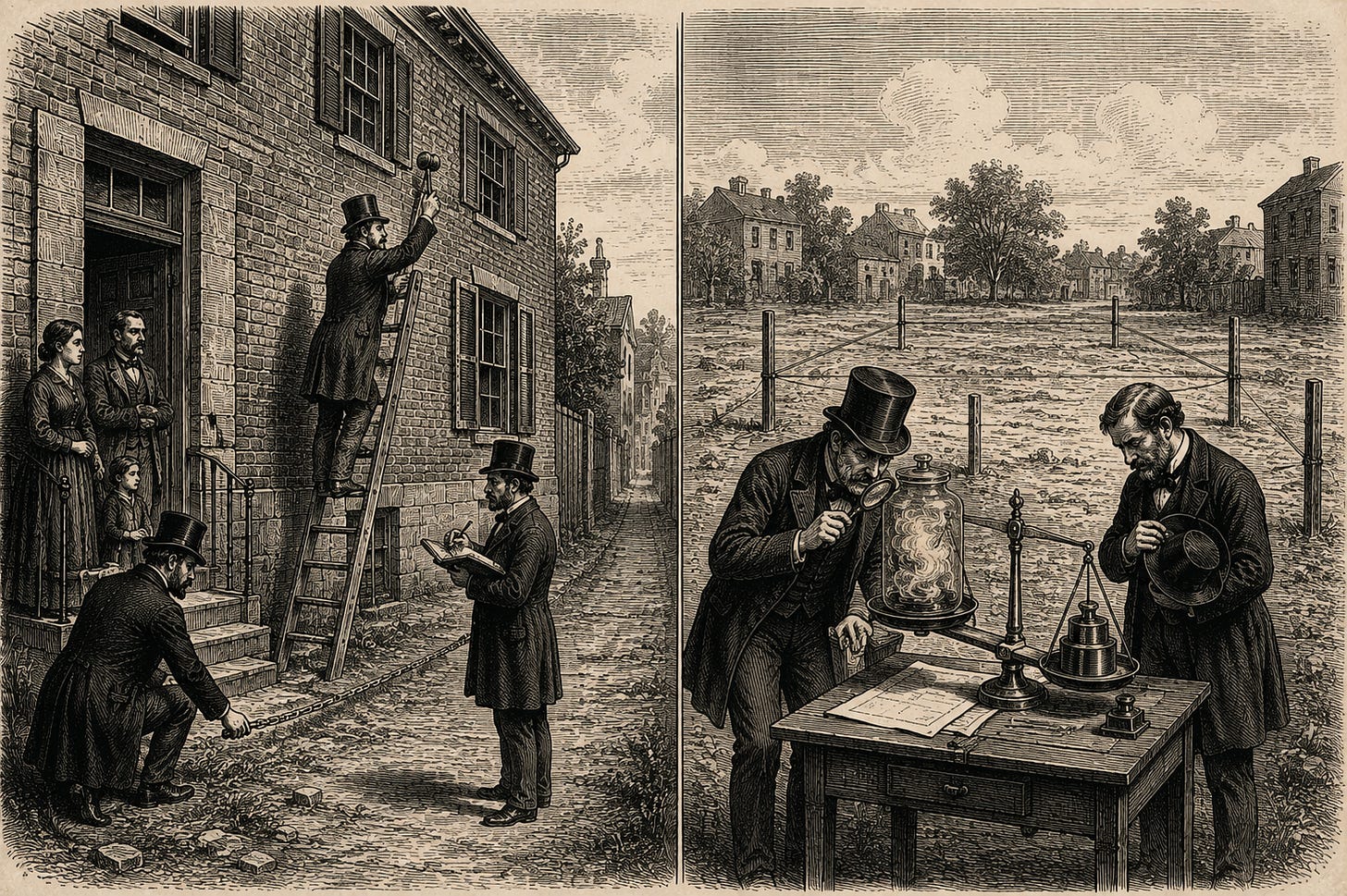
Hwang’s book deserves its second life, because the mechanics it documented were real and remain real. Programmatic advertising trades inventory nobody inspects at speeds nobody can follow, priced by intermediaries who take their cut in the dark. His analogy was the mortgage market circa 2006: opaque instruments, mispriced risk, a system whose participants all had reasons to keep the grade inflated. The word subprime did exactly the work he wanted. It told readers this ends with a bang.
Look closer at the parallel, and it breaks at the load-bearing joint.
Subprime was bad paper written against a real asset. The houses existed. Families lived in them, insurers priced them, county assessors walked their lots. The catastrophe came because debt was stacked against those houses beyond what their cash flows could carry, and when the borrowers buckled, the asset’s price had to find the truth. That's what a crash is. The ABX index rolled over, two Bear Stearns funds died in the summer of 2007, and by September 2008 the repricing had a date and a body count. Price discovery arrived because something real was there to price.
Run the same test on advertising. Under the paper, what is the asset?
The industry’s answer is attention: the human minutes the impressions supposedly contain. But nobody in the chain holds those minutes, and nobody delivers them. What actually trades is exposure, the technical fact that an ad occupied pixels on a loaded page. Exposure stood as a proxy for the asset. The proxy was the only thing anyone ever held. The JPMorgan experiment is what a proxy looks like under audit: the discarded 99% evaporated and the reported performance never moved, because the thing the discarded sites supposedly carried was never there in commercial quantity to begin with.
That is the flaw, and it inverts Hwang’s ending. A market with a bad asset crashes, because eventually the asset’s price finds truth. A market with no asset gets no crash, because there is nothing for price discovery to grab.
Which is what Landi saw. The objection writes itself: attention measurement exists. Vendors sell it, buyers run it on campaigns, and the industry’s real defense of its product is incrementality and lift testing, which measure campaigns honestly enough. What never happened is settlement. No independent measure of delivered attention ever became the currency the market bills in. Lift studies price the campaign; nothing in the chain prices the inventory. So the gap between what is sold and what is delivered never has to be marked, and a gap that never gets marked never defaults on paper. It just defaults in fact. Years ago. Quietly. In the spread between the two things.
Subprime wrote bad paper against a real asset. Advertising wrote real paper against no asset at all.
The flaw sat unexamined for six years because the crash framing suited everyone. Critics got a prophecy with a date perpetually pending, the safest kind. Incumbents got an accusation they could outlive one quarter at a time, as if the absence of a bang proved the presence of an asset. Buyers got permission to keep allocating. A default with no declaration mechanism embarrasses nobody on a schedule, so nobody went looking for one.
So Hwang was right about the disease and wrong about the death. No Lehman weekend is coming for the ad market. There is something slower and, for anyone building here, far more useful: a 30-year-old market discovering that the exit from a commodity with no asset underneath runs toward the version of attention that is one.
II. The Spot Market
The definition does most of the work here, so get it exact.
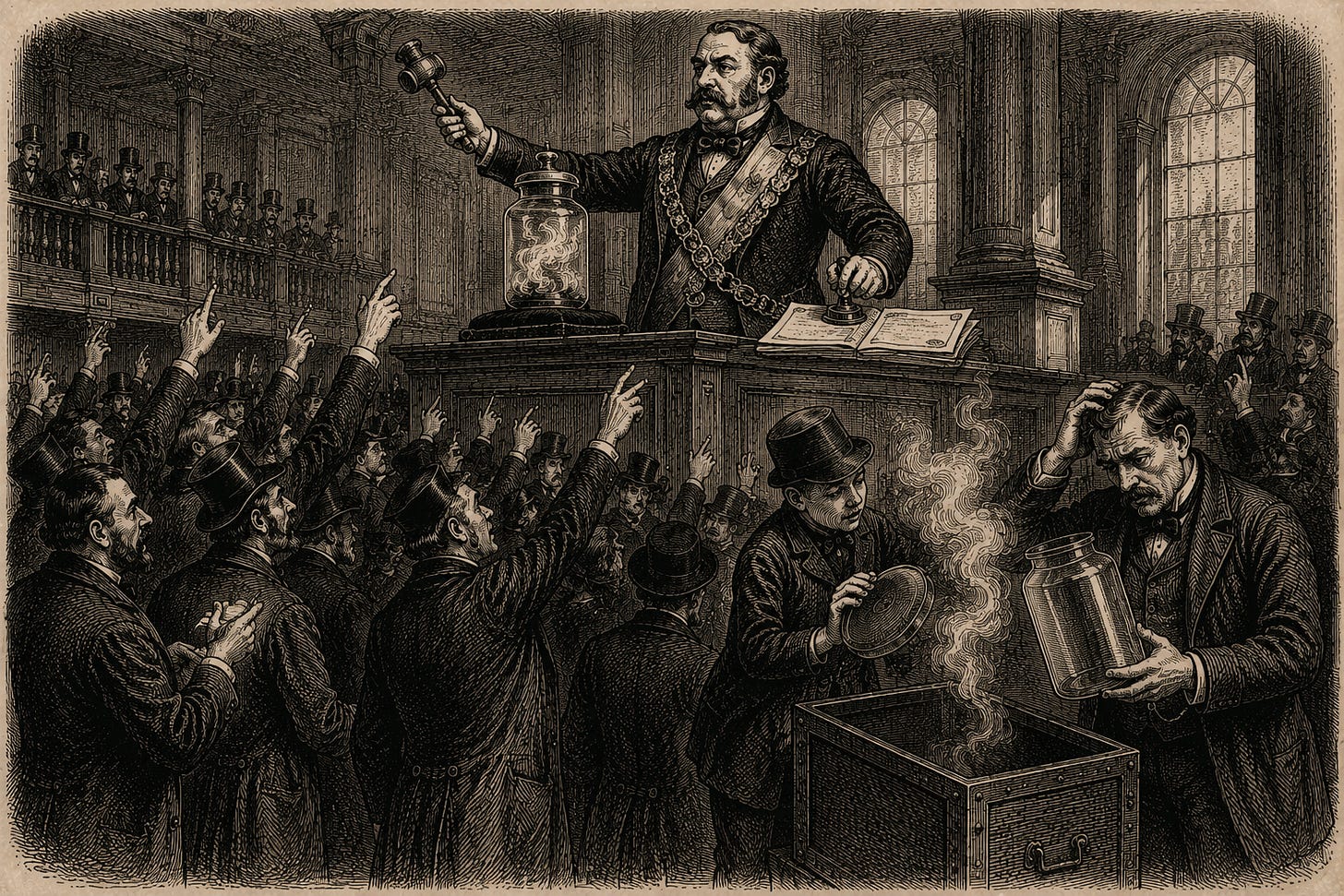
Exposure is a commodity created by a page load, bought by the impression, and extinguished by delivery. It cannot be stored. It cannot appreciate. Every purchase expires at the moment of fulfillment, which is why the budget resets to zero every January and the CMO starts over. In commodity terms, it is a spot market with no storage layer, trading a good that ceases to exist on delivery.
Once you see that, the 30-year paradox stops being a paradox. The auction got smarter every year: real-time bidding, header bidding, identity resolution, brand safety scoring, multi-touch attribution. And the measured response fell from 44% to under half a percent, because all of that machinery optimizes the trading of the commodity. None of it makes the commodity worth more. You can wrap the world’s best market microstructure around pork bellies, and the bellies stay bellies. The engineering went into the exchange. Nothing went into the asset, because there wasn’t one to invest in.
The market met this problem by grading its own homework. The platforms that sell the inventory also define the metric, operate the measurement, and certify the result, an arrangement no commodity exchange would tolerate for an afternoon. Two exhibits, both familiar, both worth re-reading for the structure underneath the scandal.
Exhibit one. In September 2016, Facebook disclosed it had been overstating average video watch time by excluding views under three seconds. The error ran for roughly 18 months. Early estimates put the inflation at 60% to 80%; plaintiffs later alleged it ran far higher. Facebook settled for $40 million in 2019. In the window that metric ruled, newsrooms fired writers and rebuilt around video on the strength of a number the seller had generated about its own product. The correction cost the seller eight figures. It had cost the buyers an era.
Exhibit two is gentler and reveals more. In April 2017, Reed Hastings told investors that Netflix’s biggest competitor was sleep. Read what the line concedes. In 2017, the company holding attention data as deep as any in the business—minute-level, person-level, longitudinal—sold no advertising at all. It kept the measurements and charged subscriptions against the behavior they documented. Netflix runs an ad business now; the tier opened in late 2022. The concession outlived the change, because the point was never Netflix’s restraint. Through the era this essay describes, the company that could prove its attention had no need to sell it, and the companies selling attention had no way to prove it. When the seller names its own denominator, the metric has left auditable territory.
Self-graded metrics on a self-extinguishing commodity. That is the spot market, entire. The return decayed for 30 years before the buyers started walking, and the patience is the real wonder.
III. Where the Money Already Went
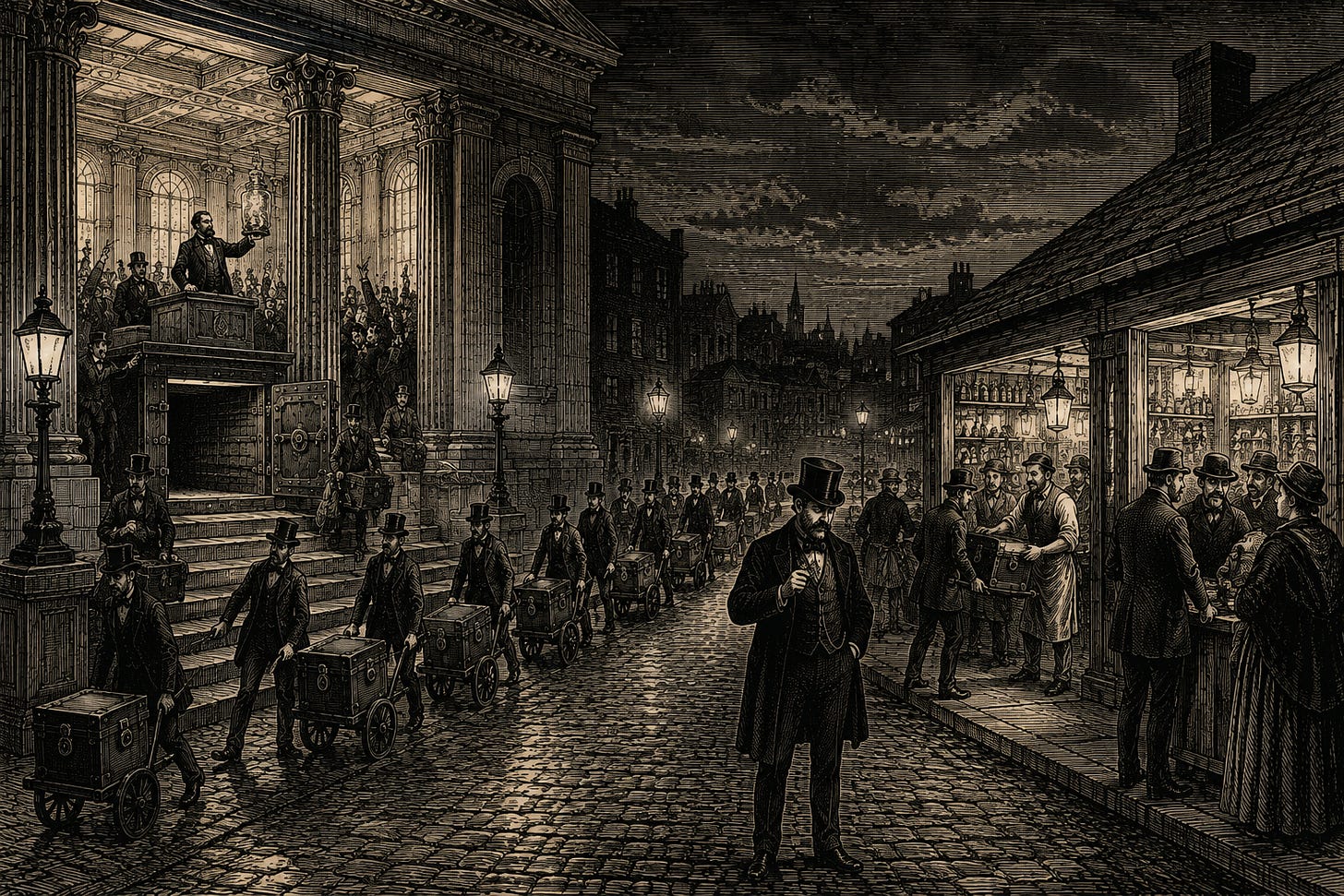
They are walking, and the tape reads like the only default notice this market will ever file.
Start with the destination. The IAB’s 2025 creator economy report puts U.S. creator ad spend at $37 billion for 2025, up 26% year over year, growing roughly four times faster than the total media industry. The same release carries the historical line: $13.9 billion in 2021. The category nearly tripled in four years, through a rate cycle that punished speculation elsewhere in media, while total media grew 5.7%.
Now the origin. Global linear TV ad spend is down 28% in absolute dollars since 2013, per WARC, and projected to slip to about $139.1 billion in 2026, its lowest level since 2005. Linear’s share of global ad spend has collapsed from 41.3% in 2013 to 12.4% in 2025, headed for 11.3% next year. The original exposure product, the 30-second spot against panel-estimated eyeballs, is shrinking in nominal dollars during an expansion.
Read those two lines as one movement, and skip the industry’s preferred vocabulary for it. Fads run on sentiment. Ad budgets get procurement-audited like any other nine-figure line, and they move when CFOs sign. What the signatures say is that a dollar handed to a creator buys something the exposure market cannot manufacture at any price: a documented relationship with a specific returning audience, attached to a person the audience chose. Most creator spend still clears through digital rails. The money left the unpriceable commodity and found the priceable relationship inside the same pipes.
The obvious objection sounds devastating and dissolves on contact. Digital ad revenue keeps growing, so where’s the default? The invoice and the asset are different objects. The auction’s total take grows because the platforms consolidated demand into a handful of venues and priced accordingly; pricing power is a property of the exchange, and the exchange is real. None of that says anything about the commodity, whose measured return spent three decades falling toward zero. A market can grow its revenue and default on its product at the same time, provided nobody measures the product. Which returns us to Landi’s point. The measurement never gets commissioned.
Allocation is how markets declare what accounting will not. The budget line just moves, quarter after quarter, at four times the market’s growth rate, until one day the old category’s decline gets described in the trades as secular and everyone nods as if it had always been obvious.
IV. The Visit and the Habit
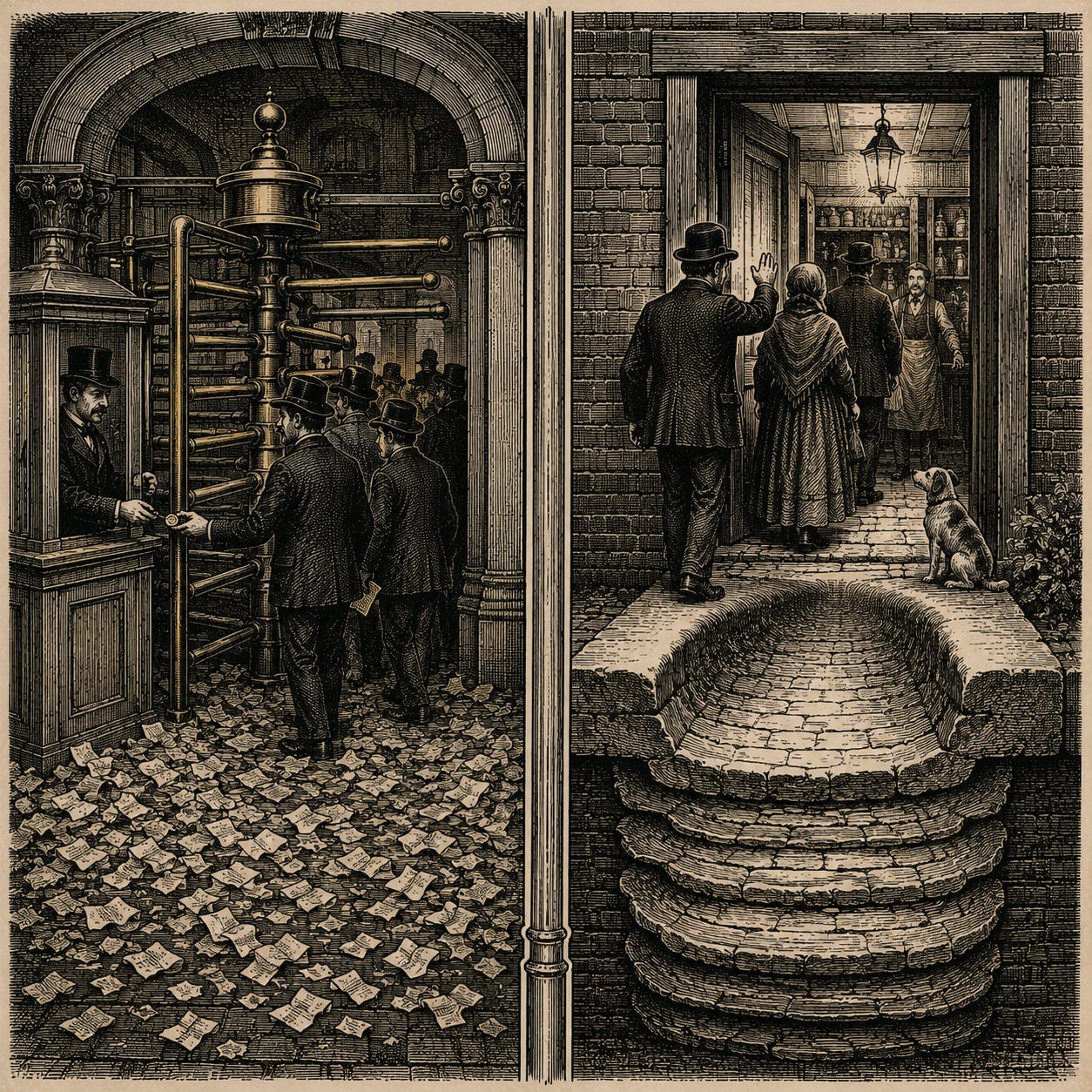
Everything above runs on one distinction.
The exposure market rents audiences priced by the visit. A visit is a single attendance event: the page loaded, the video started, the impression served. The advertiser’s claim on the audience begins when the visit begins and dies when it ends. The spend must be repeated forever just to stand still. Revenue built on visits has the persistence of the visit: none.
The habit is a different object. A habit is documented likelihood of return without re-acquisition: the audience that comes back tomorrow because it came back yesterday, with no auction spend required to summon it. It attaches to a person or a property. A placement never holds it. It persists across containers; when the platform changes or the algorithm reprices, the habit re-forms around its object on the other side. It produces cash flow that recurs because the audience recurs: memberships that renew, catalogs that get re-watched, merchandise that reorders, sponsorships that come back. It can be grown, damaged, measured, and priced. It accrues.
One property on that list needs its weakness stated plainly, because a credit committee will find it first. Transfer. Part of every habit attaches to a person no contract can hold, and that part walks when the person does. The split shows itself whenever a departure forces it into the open: the audience divides in public, part walking with the person, part staying with the property, and the division prints in subscriber counts within weeks. The Red Seat roster in the next section is the walked part, monetized. Lenders will price that split before they price anything else.
And one more property matters to this publication: the habit leaves records a counterparty can check. The strongest records sit off the platforms entirely. Renewal histories, reorder rates, direct revenue, the sponsorship book: lines a lender audits the way lenders audit everything. The public layer, subscriber counts and watch behavior, works as corroboration, and yes, the platforms produce those numbers too. The difference is structural. In the exposure market, the party grading the delivery is the party selling it. The platform that surfaces a subscriber count has no stake in the sponsorship it corroborates. The creator who opens the renewal book is handing over something a buyer can test. The grade and the sale finally sit in different hands.
That list is an asset’s property list, and the visit fails every test. Which permits a precise restatement of this essay’s thesis. The advertising market spent 30 years trading a commodity extinguished on delivery and calling it attention. The attention that deserves the name was accumulating somewhere else: in the return behavior attached to specific people and properties. The exposure market’s decay and the creator market’s growth are one event seen from two sides, capital discovering which of the two objects it had been trying to buy.
The visit dies at delivery. The habit compounds.
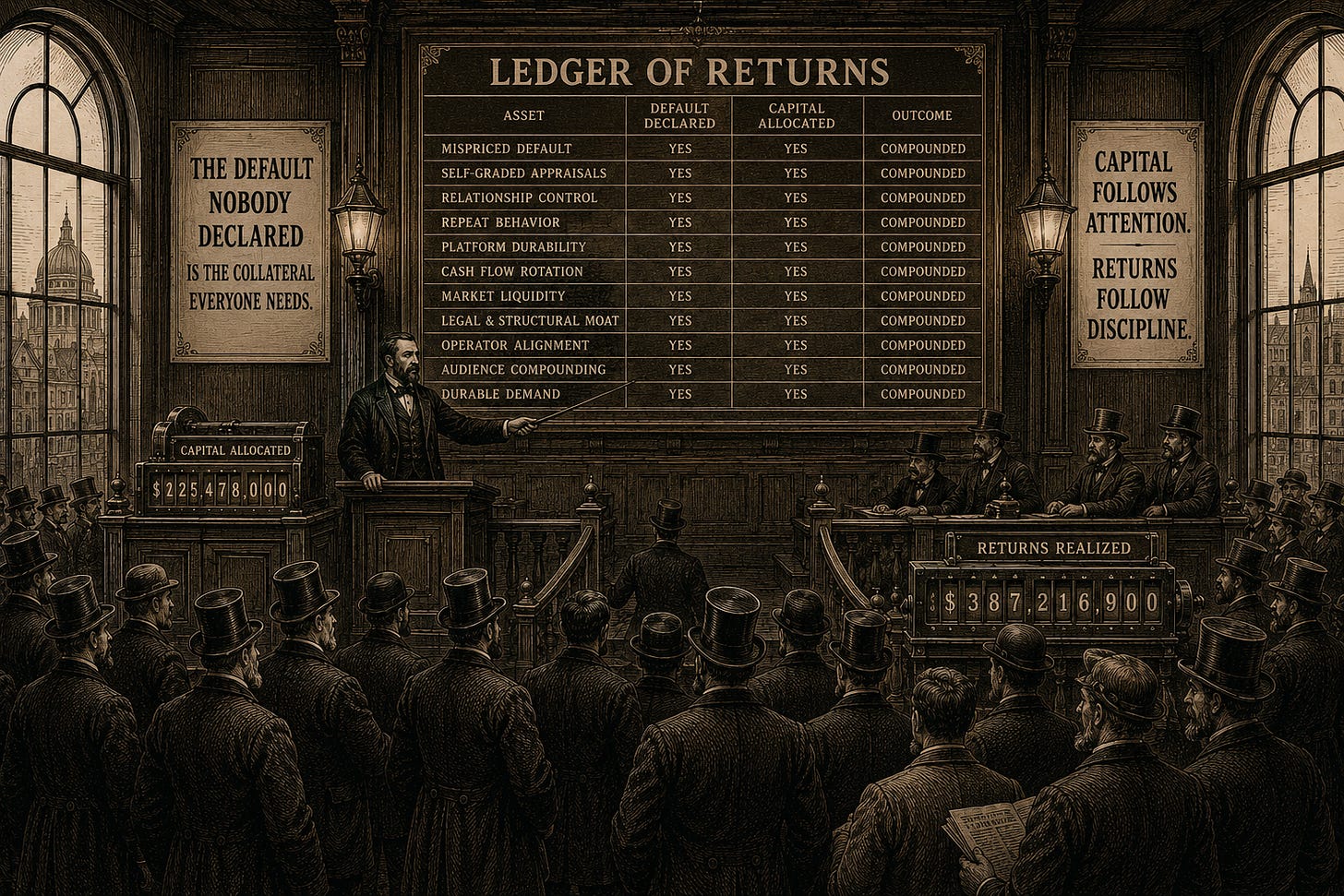
Readers of The Rented Boom will recognize the shape from the other direction: an entire category buying visits at industrial scale and booking the growth curve as if it owned the demand. The micro-drama financiers and the exposure market are running the same trade at different clock speeds. What neither holds is the thing underneath.
V. The Rent
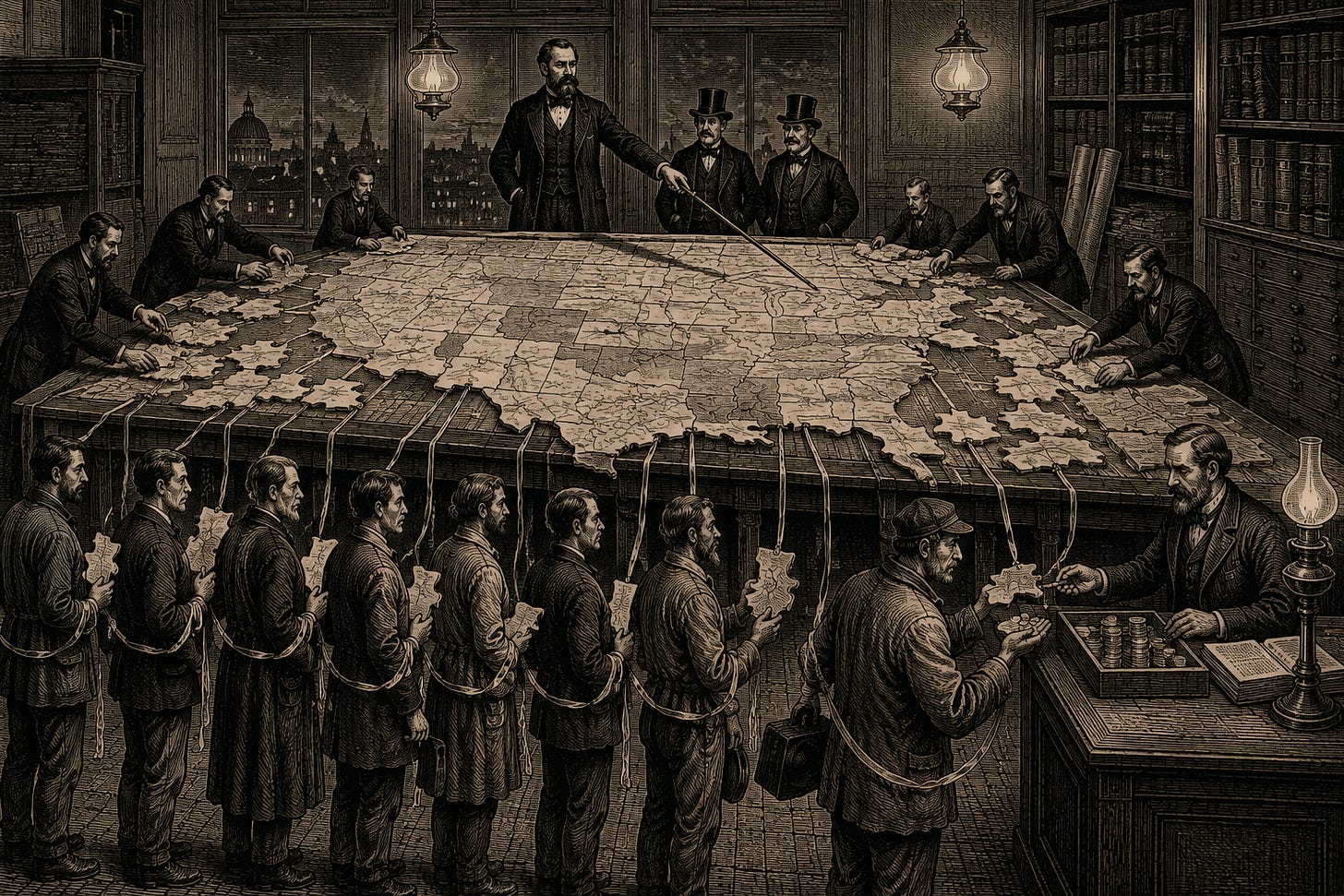
Aggregate reach still works. Fox is the proof worth studying, because Fox is running the most instructive public version of what comes next.
Fox can still assemble the old number when the calendar cooperates. Its Super Bowl LIX broadcast in February 2025 averaged 127.7 million viewers across platforms, the biggest audience American television had measured to that point. It holds the U.S. English-language rights to the 2026 World Cup, a position it locked up for a reported $485 million back in 2015. The ad math on events like these still runs at aggregate, and the aggregate still clears at premium CPMs.
Between the events, the new mechanics show. In February 2025, Fox acquired Red Seat Ventures, the company that produces and monetizes the independent shows of Tucker Carlson, Megyn Kelly, and Bill O’Reilly: 17 creator-led programs carrying more than 200 million monthly active views. Note the structure of that transaction. Three hosts who once anchored the company’s biggest audiences left the building and rebuilt on open platforms, on shows they own. Fox’s route back to that reach was to buy the servicing layer around them, because the audiences themselves cannot be bought. By early 2026, Lachlan Murdoch was telling a Morgan Stanley conference that Red Seat had delivered just under 3 billion YouTube views in 2025, with audio downloads up 97%. He also described a Tubi where roughly a tenth of viewers arrive for creator content and stay for the film library. The creators bring the habit; the library rents it after arrival.
For the World Cup itself, Fox joined FIFA and YouTube in handing IShowSpeed live match feeds to simulcast to his own audience with his own commentary, semifinals and final included. Terms undisclosed. And at the upfronts, creators now stand on the network stages pitching advertisers directly, inside the ritual built to sell the aggregate. The buyers noticed who the room came to see.
Every one of those moves is rational. Reassembling broadcast-scale reach from creator fragments is a real strategy; the reach reassembles, the aggregate sells. The structural fact to price is what the assembly is made of. The old Fox aggregate was owned: the network held the affiliate, the schedule, and the show. The new aggregate is rented from fragment holders, each of whom owns the audience relationship personally, carries it wherever they go, and can read their own numbers.
Now run the arrangement forward through a few renewal cycles. Every negotiation is a tuition payment. The streamer who simulcast the World Cup final learned what the rights holder could not supply for itself. The podcasters know what their downloads carried. The creators on the upfront stage watched the network sell their audiences at network rates and can do their own subtraction. Reach consolidates at the aggregator. Ownership stays scattered across the fragment holders. And the rent compounds in one direction, because the aggregator needs the fragments more than any fragment needs the aggregator, and repricing in a market shaped as that runs toward the owner.
The aggregator’s margin is the fragment holders’ education gap. The gap closes annually, and both sides can see the calendar.
VI. What Gets Written Against the Habit
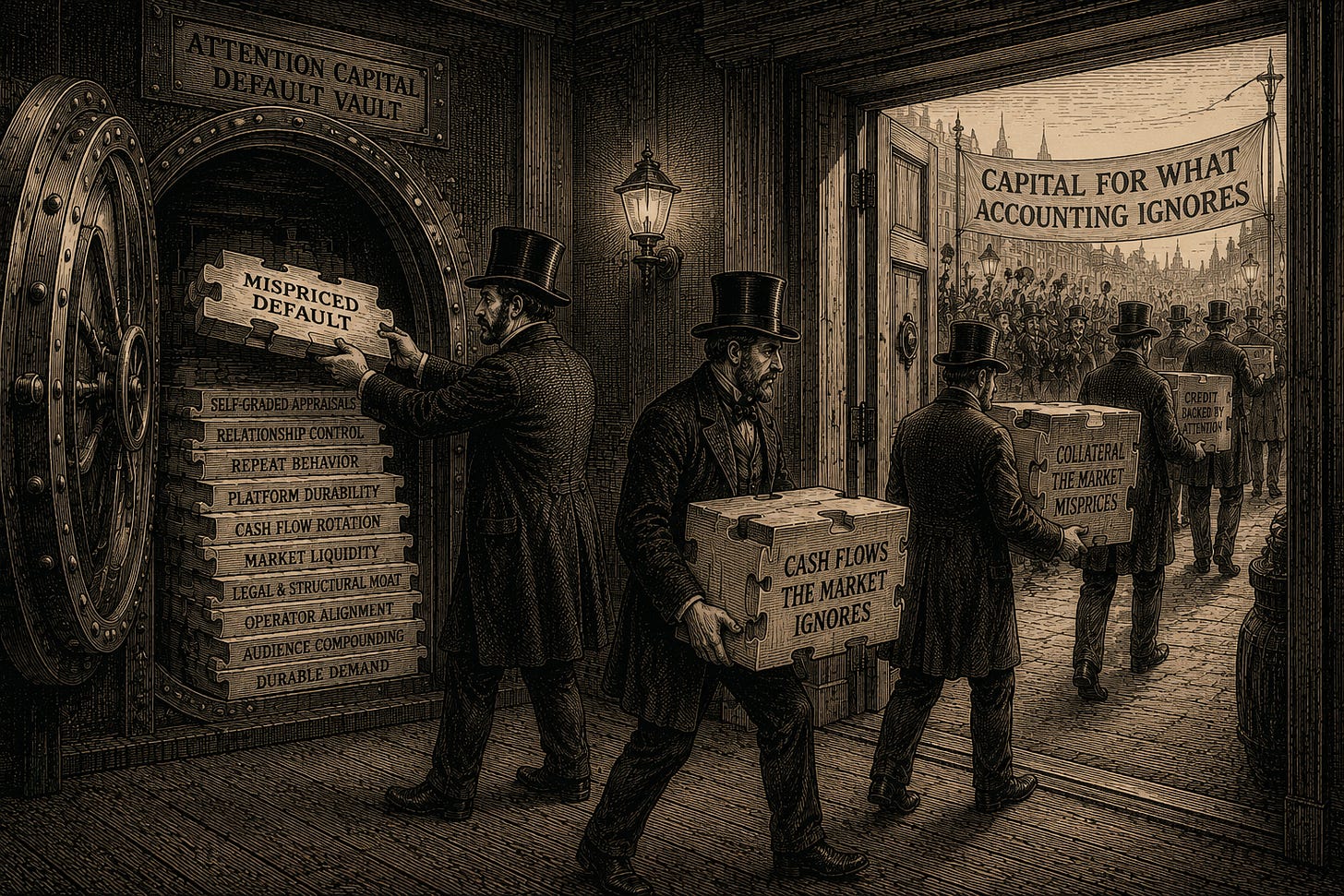
Everything to this point has been market description. Now the finance, because the finance is where the two halves of this essay meet.
Credit runs against cash flow that persists. That is the entire discipline in one sentence, and it is why the exposure market, for all its hundreds of billions of annual volume, never produced paper written against the inventory itself. Try the underwriting and watch it fail at the first question. A visit cannot be underwritten: no recurrence to document, nothing that survives stress. There is no tomorrow in the instrument. Lending against exposure would mean lending against next year’s auction results, and a credit committee prices that correctly, at zero.
A habit underwrites. Documented likelihood of return is the property lenders price everywhere else in the economy: recurrence you can count, durability you can test through shocks, revenue lines fed by the behavior that a servicer can audit. A membership base with years of renewal history. A catalog with measured re-watch behavior. A merchandise line with reorder rates. A sponsorship book that recurs because the audience recurred. These are attention converted into the categories credit already knows how to read. The records sit where a servicer can reach them, the platform rails for the behavior, and the creator’s own books for the money, timestamped and archived at a granularity the mortgage market never had.
The diligence file is the difference. On the exposure side, there is nothing durable to put in it. On the habit side, the file assembles from records that already exist: the return curve through the last algorithm change, the audience’s behavior during the creator’s slowest quarter, the share of revenue that arrives without any platform’s discretion, the renewal history on every recurring line. All of it sits recorded on the rails today. The missing piece is a framework that reads it, and the discipline to lend only against the lines that survived a stress.
What stands between the documented habit and rated paper is the build I mapped in The Pipes Aren’t Built Yet: the collection layer, the credit-side audit framework that turns platform records and the creator’s own books, contracted revenue included, into structurable collateral. That essay argued the pipes are the gate on the supply side. This one supplies the demand-side answer to the question it left hanging: why anyone should bother building them. The money heading toward the pipes has a push behind it. The slow, undeclared failure of the commodity is driving it off the biggest spot market in media. Allocation ran toward exposure for 30 years because exposure was legible and the habit was not. The legibility is what remains to build.
The Declaration
So why does the default never get declared? Because a declaration requires settlement on a measure of delivered attention, and nobody in the exposure chain can afford to adopt one. The platforms graded the paper. The agencies billed on the grades. The measurement firms answer to the graders, who are the clients. Everyone holds the same position, which is why the JPMorgan result changed one advertiser’s site list and nothing else. The finding went unanswered because no answer existed that didn’t indict the answerer.
So the declaration proceeds the only way it can, through allocation: $23 billion of new U.S. creator spend in four years, linear’s share of the global market cut by more than two-thirds since 2013, a legacy broadcaster borrowing a streamer’s audience for its own World Cup. No bell rings. Budget lines move, at four times the market’s growth rate, running a repricing as large as any media has seen, entirely in the ledgers.
State what would prove this wrong, so the record can check it. Two findings would break the thesis. If the Chase result stops replicating, if supply cuts of that size start costing advertisers measurable performance across a broad set, then exposure was delivering after all, the default framing dies, and Hwang’s crash goes back on the table. And if U.S. creator spend growth converges to market rate and holds there for two straight years, the rotation was a one-time re-rating, the habit is mislabeled retention math, and this essay overpriced it. Neither print exists today. Watch for both.
The capital that learns to price the habit, to read documented return behavior the way an earlier generation learned to read mortgage pools and mileage programs, writes the next 20 years of media finance. It already stopped answering the auction. In a market with no asset under the paper, that is the notice.
Two questions linger. When the exposure market’s decline finally forces the settlement nobody will adopt, who gets marked, and by whom? And on the other side of the ledger: the habit is documented, the money is arriving, the pipes are unbuilt. Who writes the first paper?
Why Subscribe
Because the biggest ad market ever assembled has been defaulting quietly for years, the budget lines have noticed, and almost nobody is pricing where the money lands.
Every week, Attention Capital tracks how documented audience behavior becomes enterprise value: the contracts, the balance sheets built on them, and the layer underneath that finance has not learned to read. If you allocate capital, this is where attention-backed credit shows its shape before the first deal prints. If you operate in media, this is where the difference between the visit and the habit gets priced before your next negotiation. If you build audiences, this is the market learning what the relationship you hold is actually worth.
Get the SOS. Brief
The sharpest streaming intelligence, delivered to your inbox.