Everyone's Renting Netflix's Stage: Why Rockstar Picked Netflix for GTA VI
The moat was never the content library
For a decade the case for Netflix was about volume: more shows, more originals, more library depth than anyone could match. That case is getting harder to make. Disney has Marvel. Amazon has Prime Video originals. YouTube, as Simeon McMillan has argued, is now growing revenue at a pace close enough to Netflix's own that the "biggest library" framing stopped being the differentiator years ago.
What Netflix actually has, and nobody else does, is the ability to stage a single streaming moment for the entire planet at the same time.
That's a distribution asset and increasingly, it's a rental product.
Rockstar doesn't need Netflix. It wants what Netflix is.
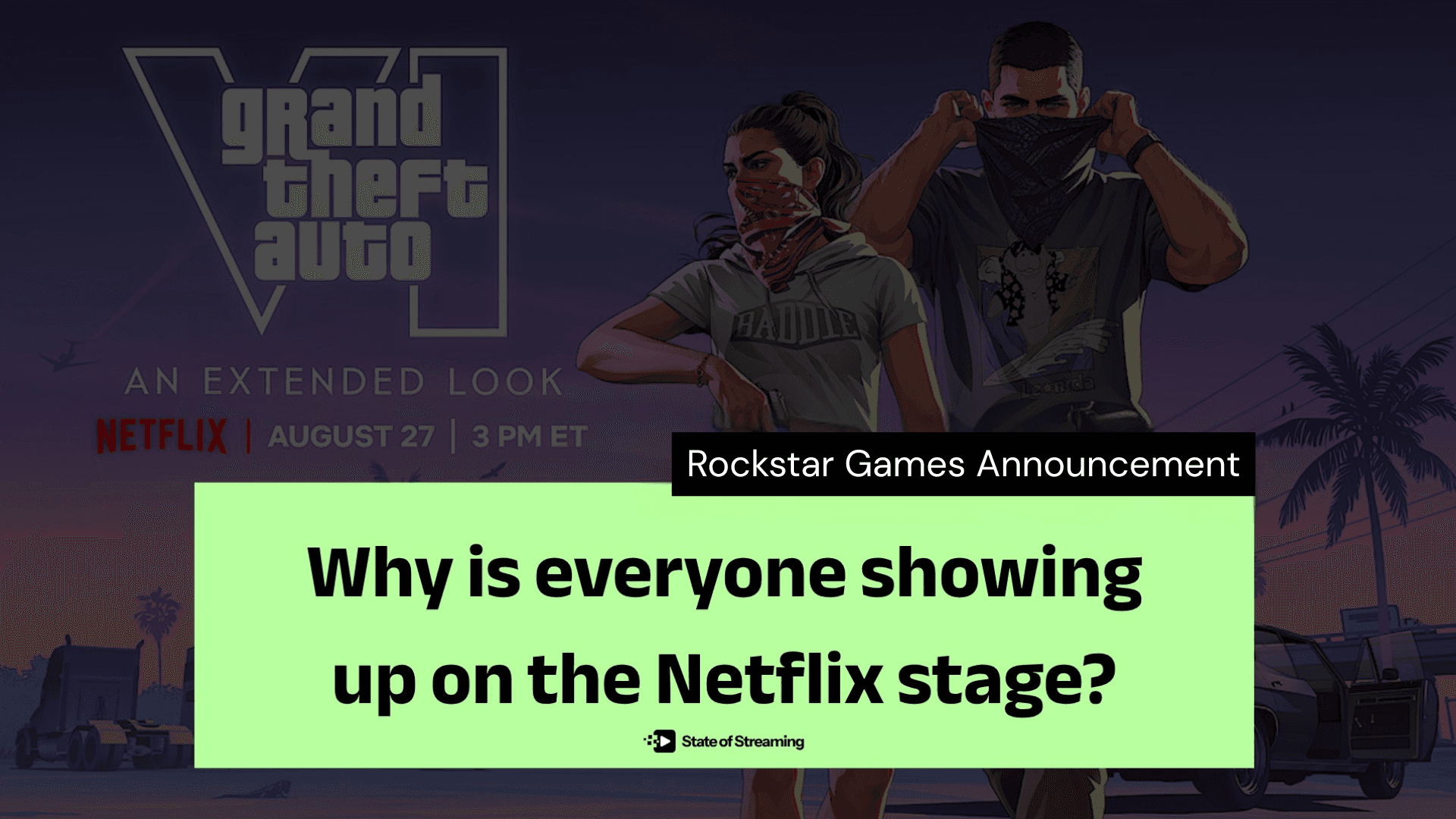
GTA reveals don't have a reach problem. Rockstar's own YouTube channel can clear 100 million views on a trailer with zero outside help. So the 6-hour Netflix exclusivity window on "An Extended Look" (Aug. 27, 3pm ET, six hours ahead of YouTube) isn't solving a discovery problem. It's buying a premiere.
The original trailer released two years ago now has more than 288M views. Watch it here.
Netflix's own framing signals where it sees this deal sitting. Netflix routed Brandon Riegg, VP of Nonfiction Series, to speak for the partnership and the language matched: Netflix framed this as "a place where the most ambitious storytelling, from any medium, can find the biggest possible audience."
Back in March, we argued that Netflix's BTS livestream wasn't really about the music, and that Netflix's growing sports portfolio wasn't really about sports. Netflix's tentpole strategy was "never really about sports. It's about becoming the only platform on Earth that can deliver a singular cultural moment to the entire planet simultaneously. Sports is just one input."
GTA VI is the same mechanism, different input. Gaming.
The earnings math explains why this deal costs almost nothing
The strongest evidence that this is a positioning trade, not a content trade, sits in Netflix's own Q2 numbers. As McMillan broke down, revenue grew 13% while total viewing hours grew only 2% — a spread he calls Netflix "getting dramatically better at monetizing every hour on the platform" (not a company that needs more hours to hit its targets).
That distinction matters here. A GTA VI trailer premiere generates essentially no incremental viewing hours and disappears from the platform within a day. If Netflix were optimizing for hours, this would be a rounding error not worth doing. Instead it's the same math we cited on live tentpole events generally: outsized value for "conversation, acquisition, and retention" while representing "only a small portion of content spend." GTA VI represents a the rare opportunity to buy a seat in the zeitgeist, priced in relevance rather than dollars, that would look irrational on an hours-per-dollar basis and looks obvious on a positioning basis.
The category is the tell
BTS was music. The World Cup pitch is sports. GTA VI is gaming — a category Netflix has expanded into recently. That's the pattern to be watching, not any single deal because Netflix is building the default venue between verticals: the place where the biggest moment in any category, on any given week, chooses to happen first.
Conclusion
The GTA VI deal fits a thesis we've been tracking since March. Netflix's actual competitive advantage has shifted from content supply to distribution monopoly on singular global moments, and its own hours-vs-revenue decoupling means these premieres cost the company almost nothing to stage. Every category that hands Netflix a moment for free — music, sports, now gaming — reinforces the same position: Netflix isn't renting anyone's audience anymore. Everyone else is renting Netflix's stage.
Related SOS. coverage: BTS Just Showed Why Netflix Will Own the 2030 World Cup · World Cup Outlook: The 2026 Landscape and How Netflix Is Building the Case for 2030 · Is Netflix Building an Ad Tech Company? It Sure Seems So. · The Netflix Engagement Panic Is Wrong: Q2-26 Earnings Review
Get the SOS. Brief
The sharpest streaming intelligence, delivered to your inbox.