●Pour One Out for Addressable Linear TV | A Column by Michael Beach●SOS. ExclusiveRegional Sports Networks Aren’t Dying, They’re Evolving: An Interview with Nana Kofi Amoh●When a Creator Leaves, What Stays? - Attention Capital | A Column by Josh Stein●The Premium Moat: Why Apple TV is Streaming’s Holdout Against the Unscripted Wave●SOS. ExclusiveThe Great Transatlantic Streaming Divide: An Interview with Hemant Soni and Rahul Bhatia●How Sports Teams Are Rebuilding Their Local Media Businesses - Amoh Sports Media | A Column by Nana Kofi Amoh●The Intelligent Rebundling: Cloud, AI, and the Two Faces of Streaming●SOS. ExclusiveCan You Prove What Your CTV Home-Screen Placement Is Worth? Looper Insights' Lucas Bertrand Says Now You Can●What's Streaming? The StreamScoop Streaming TV Guide for the Week of October 4, 2026●Unlocking the Living Room: Why YouTube's New "Co-Viewed" Metric Changes the Math●When to NOT Care About the Bot Traffic - "see Fou yourself" FouAnalytics | Dr. Augustine Fou●SOS. ExclusiveHow Roku is Rewiring Sports Streaming: An Interview with Joe Franzetta, Head of Sports @ Roku●How MLB Teams Will Gain Revenue After Cable - Amoh Sports Media | A Column by Nana Kofi Amoh●The Last Truly Shared Experience: Live Sports Own the Attention Economy●The Meter Is the Market - Attention Capital | A Column by Josh Stein●Pour One Out for Addressable Linear TV | A Column by Michael Beach●SOS. ExclusiveRegional Sports Networks Aren’t Dying, They’re Evolving: An Interview with Nana Kofi Amoh●When a Creator Leaves, What Stays? - Attention Capital | A Column by Josh Stein●The Premium Moat: Why Apple TV is Streaming’s Holdout Against the Unscripted Wave●SOS. ExclusiveThe Great Transatlantic Streaming Divide: An Interview with Hemant Soni and Rahul Bhatia●How Sports Teams Are Rebuilding Their Local Media Businesses - Amoh Sports Media | A Column by Nana Kofi Amoh●The Intelligent Rebundling: Cloud, AI, and the Two Faces of Streaming●SOS. ExclusiveCan You Prove What Your CTV Home-Screen Placement Is Worth? Looper Insights' Lucas Bertrand Says Now You Can●What's Streaming? The StreamScoop Streaming TV Guide for the Week of October 4, 2026●Unlocking the Living Room: Why YouTube's New "Co-Viewed" Metric Changes the Math●When to NOT Care About the Bot Traffic - "see Fou yourself" FouAnalytics | Dr. Augustine Fou●SOS. ExclusiveHow Roku is Rewiring Sports Streaming: An Interview with Joe Franzetta, Head of Sports @ Roku●How MLB Teams Will Gain Revenue After Cable - Amoh Sports Media | A Column by Nana Kofi Amoh●The Last Truly Shared Experience: Live Sports Own the Attention Economy●The Meter Is the Market - Attention Capital | A Column by Josh Stein
Ad Tech

Frequency Wants to Change FAST's Ad Unit, Not Add More Pods
ET
Editorial Team
Jun 20261 min read
Frequency Wants to Change FAST's Ad Unit, Not Add More Pods

Free ad-supported streaming television (FAST) publishers don't have a fill rate problem. They have a unit problem.

The 30-second pod is the only inventory most streaming channels sell. Adding revenue means adding pods. Adding pods means killing retention. The industry's answer for a decade has been to stack more breaks until viewers tune out.

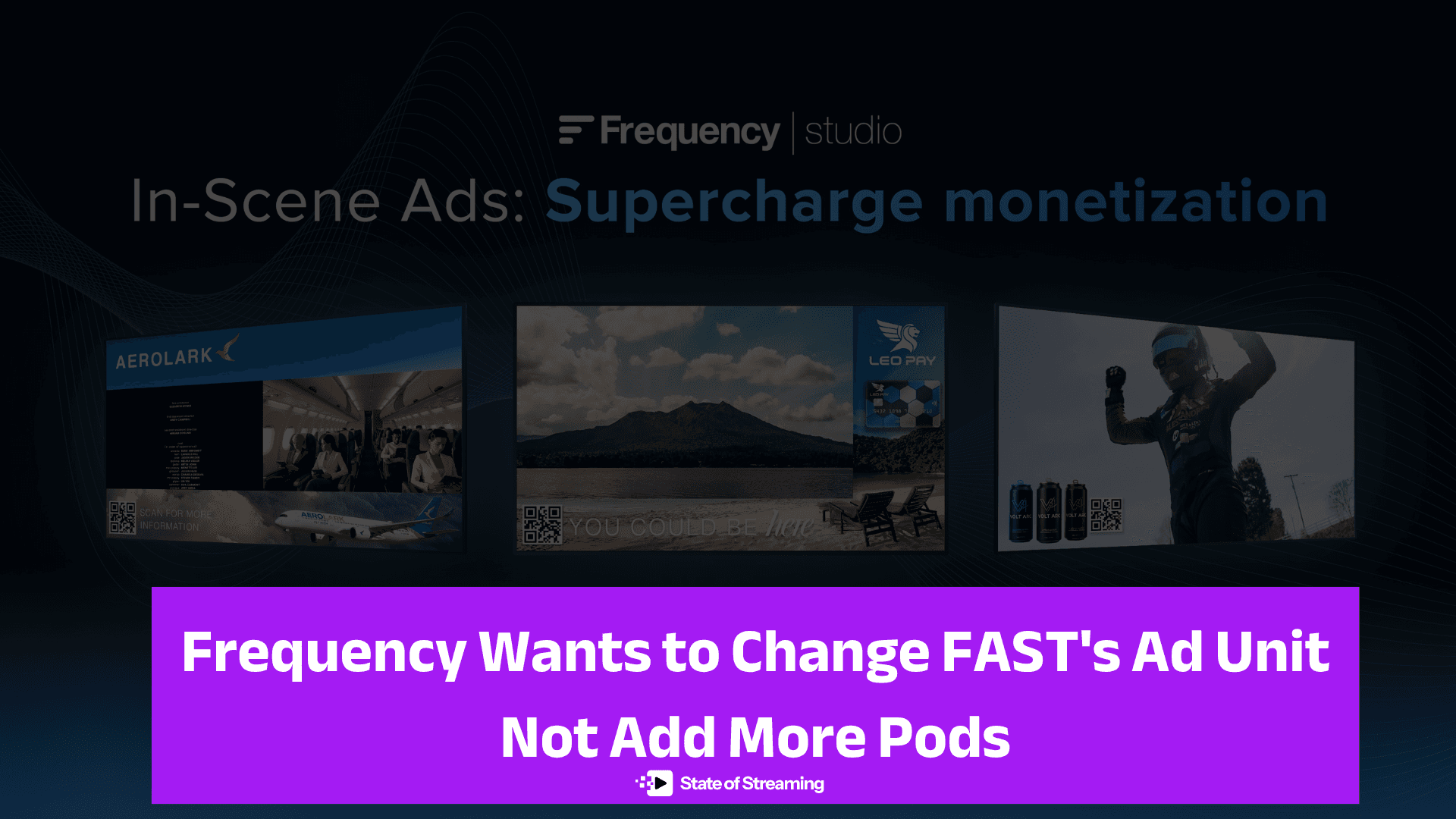
Frequency is the SaaS platform powering more than 2,500 streaming channels for partners including Amazon MGM Studios, BBC Studios and Hearst Television. On June 1, the company launched In-Scene Advertising with four formats designed to create new inventory inside scenes already running: L-Shape, Double Box, Picture-in-Picture and Overlay. Its scene intelligence layer analyzes every asset for brand safety, sentiment, attention, visual clarity, category and scene context, then inserts placement markers without changing the broadcast. The analysis runs entirely inside Frequency's infrastructure.

Frequency sits inside the publisher's pipeline, not in a central marketplace. The formats work with existing server-side ad insertion infrastructure, ad servers and measurement providers. Publishers activate without operational changes and keep full control over how inventory is packaged and sold. The company supports both direct-sold and programmatic demand, and OpenGlass — a platform built to bring direct demand into advanced CTV formats — is the first programmatic partner connected to the new inventory.

Blair Harrison, Frequency's founder and CEO, said early signals from publishers have been strongly positive, with customers eager to deploy. He described monetization as FAST's existential problem: stuck fill rates, stuck CPMs and a 30-second pod with little room to differentiate. Advertisers want novel things to buy. Publishers want incremental revenue without driving viewers away. Whether the new formats actually move CPMs or just rearrange them is the question every buyer is about to start asking.

OpenGlass is the first programmatic partner. Scene intelligence is what competitors can't copy.

Get the SOS. Brief

The sharpest streaming intelligence, delivered to your inbox.